
Why Black Myth: Wukong Still Haunts My Gaming Dreams in 2026
Black Myth: Wukong's masterful action RPG combat and unforgettable boss fights linger in muscle memory.
Some games don’t just end when the credits roll – they linger in your muscle memory, replaying boss patterns in your daydreams like a half-remembered melody that refuses to fade. Even now, in 2026, with a cascade of new releases vying for attention, I find myself slotting the disc back into my console for another pilgrimage through Mount Huaguo. The world Game Science built feels less like a piece of software and more like an intricately carved wooden puzzle box: every time you think you’ve discovered all its secrets, a new panel slides open to reveal a deeper layer of wonder.
I first plunged into the journey of the Destined One in the autumn of 2024, and from the opening cinematic clash between Wukong and Erlang Shen, I was completely disarmed. That confrontation – a swirl of arrogant gods and a defiant monkey king – felt charged with a mythology that demanded to be understood. As I stepped into the ancient forests, the air itself seemed thick with story. The world didn’t just look beautiful; it breathed. The distinct musical themes didn’t merely accompany each chapter; they seeped into the very foliage, as if the trees were humming along to the erhu and pipa.
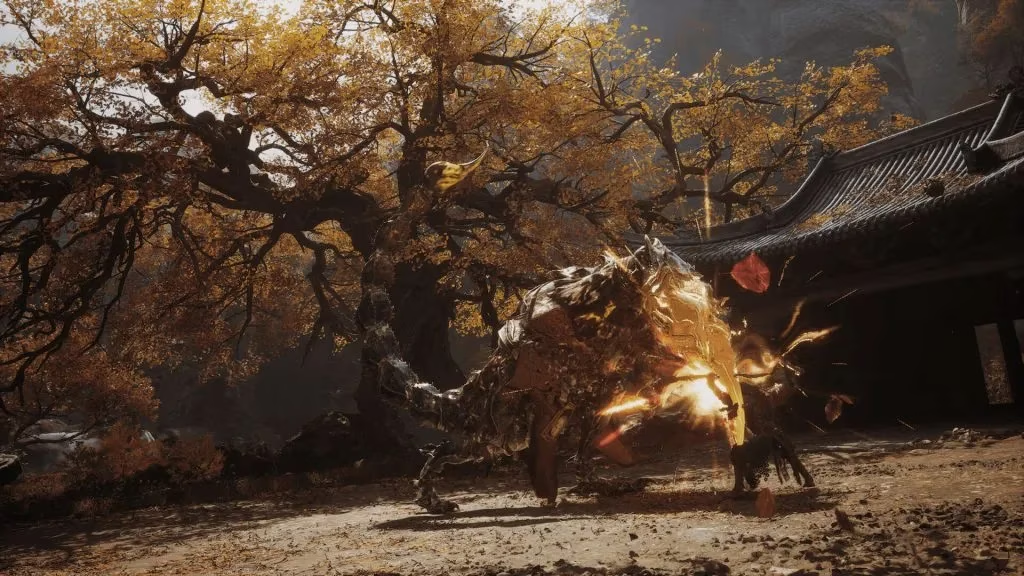
What continues to pull me back isn’t just the grandeur, though. It’s the quiet, meticulously stitched details that remind me of a master tailor embedding hidden pockets into a coat. On my first playthrough, I almost dismissed a simple, out-of-place bell as mere environmental fluff – a nod to the Monkey King’s playful irreverence. Only later did I realize that striking it was the first thread in a secret questline. Pulling on that thread unraveled a reward I clung to right until the final battle. That hidden language of discovery, where even a suspiciously arranged rock formation could lead to an entirely new boss arena or a legendary armor set, turned exploration into a dialogue with the developers.
Each armor set I plucked from the world whispered a different fantasy. Instead of a generic loot treadmill that encourages a cobbled-together aesthetic, Wukong gave me outfits like the bronze Gale Guardian set, turning me into a whirlwind of parries, or the macabre Ochre armor, which felt like donning the carapace of a vengeful insect spirit. This philosophy wasn't just cosmetic; it was a philosophy of identity. Choosing a set felt like a chef selecting a signature knife for a specific dish – it fundamentally altered how I approached the recipe of combat.
And what combat it was. The boss designs alone could fill a grotesque bestiary of unforgettable nightmares. The Loongs, those coiled lightning-spitting dragons tucked away behind secret waterfalls, were a perfect marriage of creativity and punishment. Yet the adversary who seared himself into my memory was the Yellow Wind Sage. Here was a creature dripping with such arrogant menace that every line of his taunting dialogue made my palms sweat. His intimate connection to the headless musician who pops up to deliver cryptic, catchy ballads turned that entire chapter into an operatic tragedy that few games have matched since.
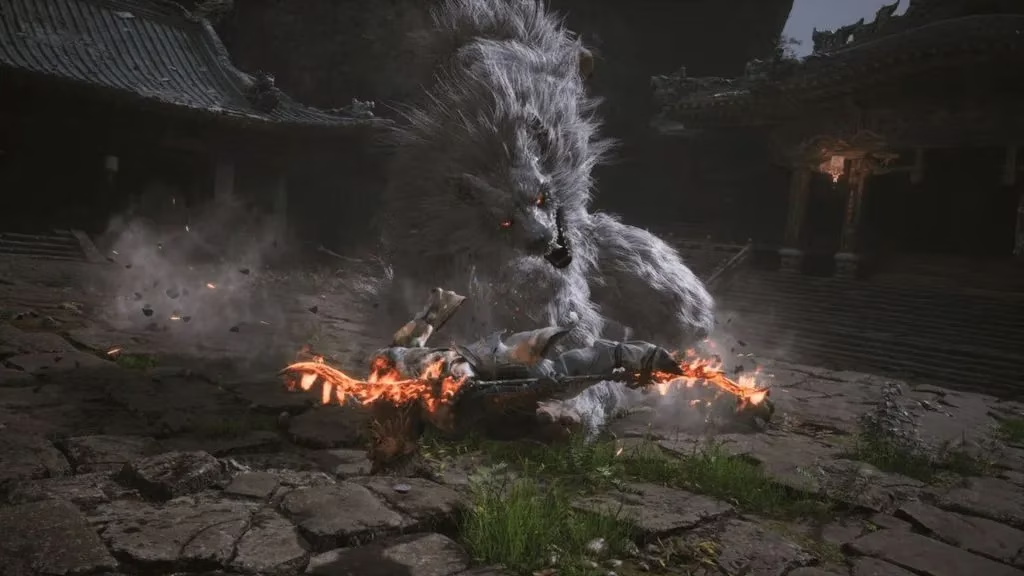
Many labeled the game a Soulslike, but Game Science sidestepped that label wisely. Yes, every common yaoguai could dismantle me if I let my rhythm slip. Yes, learning attack patterns and exploiting elemental weaknesses felt like a tense tango where one wrong step meant a blade through the heart. But the frustration was extracted like venom from a wound. Losing a fight didn’t mean losing my hard-earned Will, which transformed death from a punishing tax into a patient tutor. The combat evolved with me, especially once I accepted that the quarterstaff was not a limitation but a wand of endless possibilities. The ability to turn to solid stone and clang away a deadly blow, or to vanish into a puff of smoke and leave a phantom to take the hit, turned defensive moments into my greatest offensive pleasures.
By 2025, when the game finally arrived on Xbox, I dived into New Game Plus with a hunger for alchemy. This is where the experience transforms into a mad scientist’s lab. I slotted the Centipede Armor into my build – a beautifully cursed set that inflicts a poison debuff on its wearer in exchange for a staggering attack boost. Paired with specific spirit charms and a gourd brew, I became a living contradiction, a poisoned blade cutting through early-game bosses that once tormented me. That power trip, a controlled demolition of enemies that once seemed invincible, is a sensation only echoed by fleeting moments in titles like Wuchang: Fallen Feathers. Yet Wukong keeps you humble; a misplaced dodge near an unclipped ledge can send you plummeting into the abyss just as swiftly as an enemy’s sword.
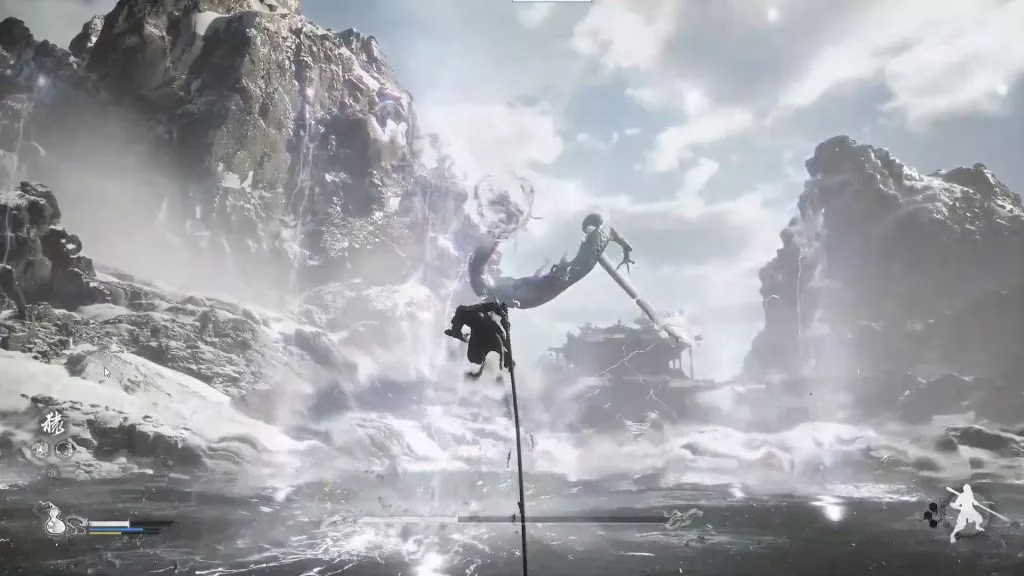
Now, in 2026, as I close my eyes, I still see the final confrontation – that iconic moment with the healing gourd that speaks a language only those who’ve shared the journey can understand. Black Myth: Wukong remains a towering achievement not because it perfects a single mechanic, but because it weaves music, secrecy, build-crafting, and blistering combat into a seamless tapestry. It’s the rare title that stands proudly beside Sekiro: Shadows Die Twice as a masterclass in presentation and execution. The Destined One’s trek is a pilgrimage I suspect I’ll keep making, year after year, as long as there are bells left to ring and celestial palaces left to storm.