
The Stone Monkey's Roar: A Journey from Wishlist to Watershed Moment
Black Myth: Wukong's historic success, driven overwhelmingly by Chinese gamers, marks a seismic shift for the global gaming industry.
The numbers, they whisper and then they roar. As I sit here in 2026, the echoes of that summer of 2024 still vibrate in my bones. It was the moment a stone monkey, born from myth and pixel, didn't just land—it cracked the very foundation of the gaming world. Black Myth: Wukong ascended, a solitary figure against a sky long dominated by different constellations, and became the second-biggest title ever to walk the halls of Steam by concurrent player count. But this was never just about a ranking. This was a heartbeat, a collective pulse thrumming from one specific corner of the globe, so loud it became the world's rhythm. Analysts peered into the data and saw a truth as clear as a mountain spring: the lion's share of this success, a staggering 88% of its Steam owners, hailed from China. The language of its reviews sang the same song—over 90% in Chinese. It was a homecoming, a celebration written in code.
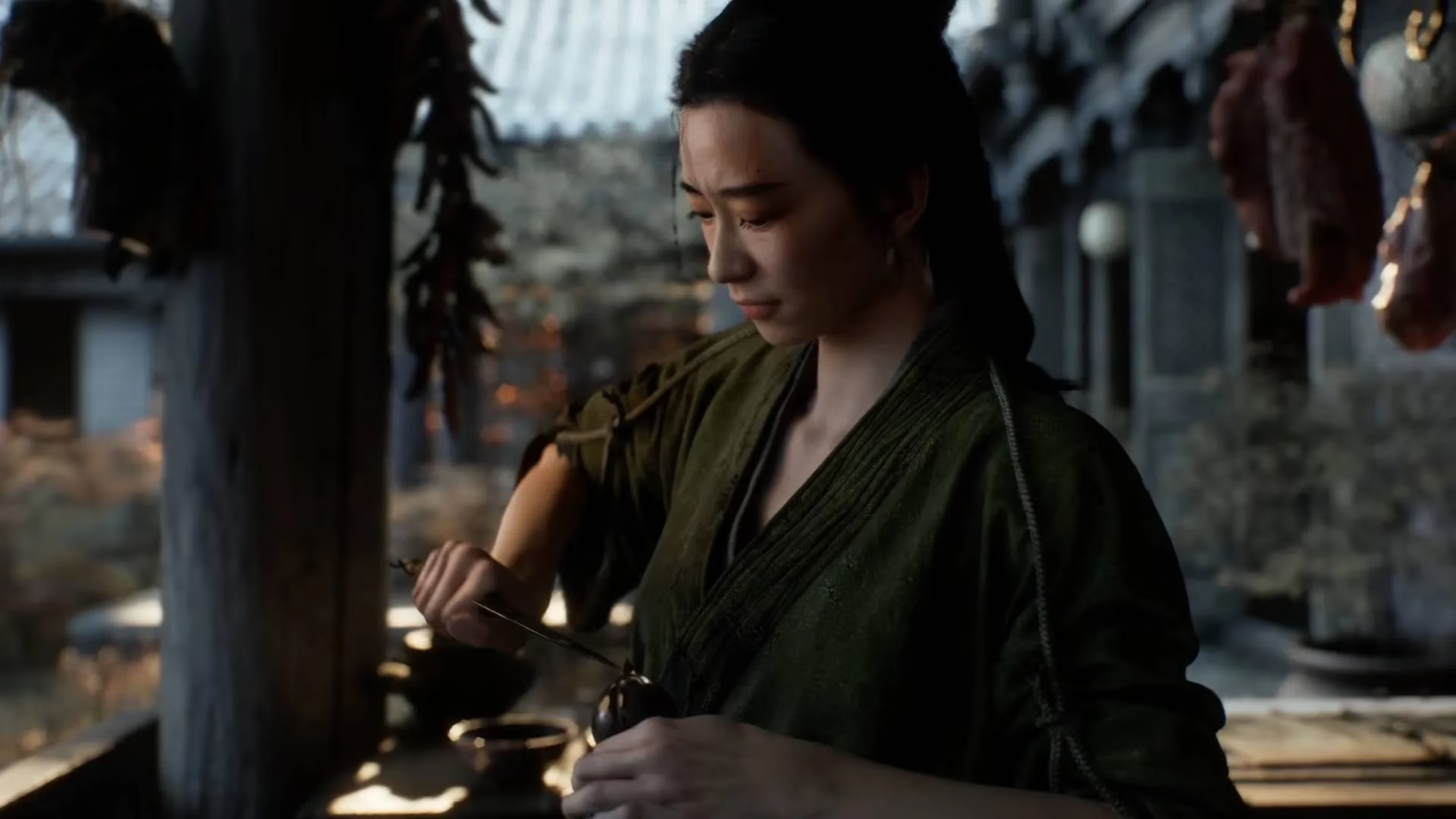
Even if you tried to silence that chorus, the remaining melody was still a symphony. Stripping China from the equation, the 10-15% of sales from the rest of the world for a game boasting over two million concurrent souls would still be a monumental hit. Wukong was a top seller from the Americas to Europe, no doubt about it. But the real magic, the profound tremor, was felt back at the source. For years, the narrative had been... well, let's be real, a bit one-note. The industry chatter often painted a picture dominated by mobile hybrids with, as one developer so colorfully put it, "5,000 variations of microtransactions." Wukong, this beautifully crafted, narrative-rich, single-player experience, stood in stark contrast. It was proof. Tangible, glorious proof. A community manager from Palworld, the very game Wukong dethroned for that #2 spot, said it plainly: "I'd vote for Wukong... I think this is the sort of positive change needed in the Chinese gaming world." That sentiment wasn't just polite applause; it was a recognition of a sea change.
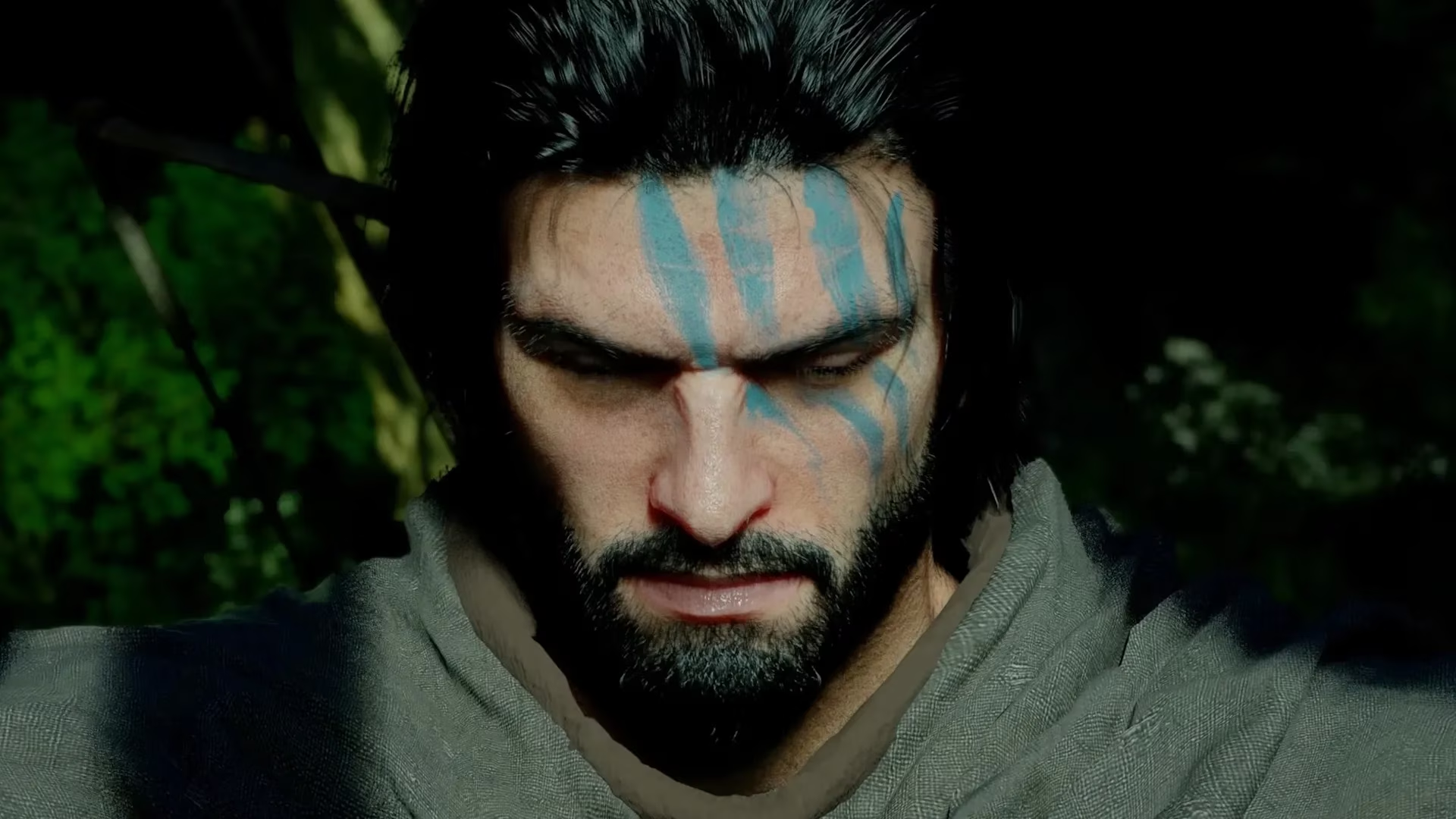
Veterans from the global stage took notice. Michael Douse of Baldur's Gate 3 fame pointed out that a localized hit might typically see 25-40% of its players in China. For Wukong to command "80+%" was, in his words, "a testament to what the region can do to shatter numbers." He saw not an end, but a dawn: "This is really only still the beginning of major international titles developed in China." He spoke of a future unshackled from the grey markets of the past, powered by full, legitimate publishing might, predicting peaks of two to three million concurrent players if the trend held. The ghost of PUBG's all-time record of 3.2 million, set in 2018 and also fueled by Chinese passion, suddenly had a potential challenger not from the West, but from the East.
And the developers back home? They felt the shift in the air long before the launch. I remember the words of Liang 'Soulframe,' director of the promising Phantom Blade Zero, spoken back when Wukong was 'just' the most-wishlisted game on Steam: "Everyone is looking at Black Myth: Wukong. If it can succeed... people will be very confident about other games." That's the thing about watersheds—they create fertile ground for everything downstream. Wukong's success wasn't just a victory for one studio; it was a key, turning in a long-locked door, granting permission, inspiring courage. It whispered to every creator in the region: "See? They will come. They will believe in our stories."
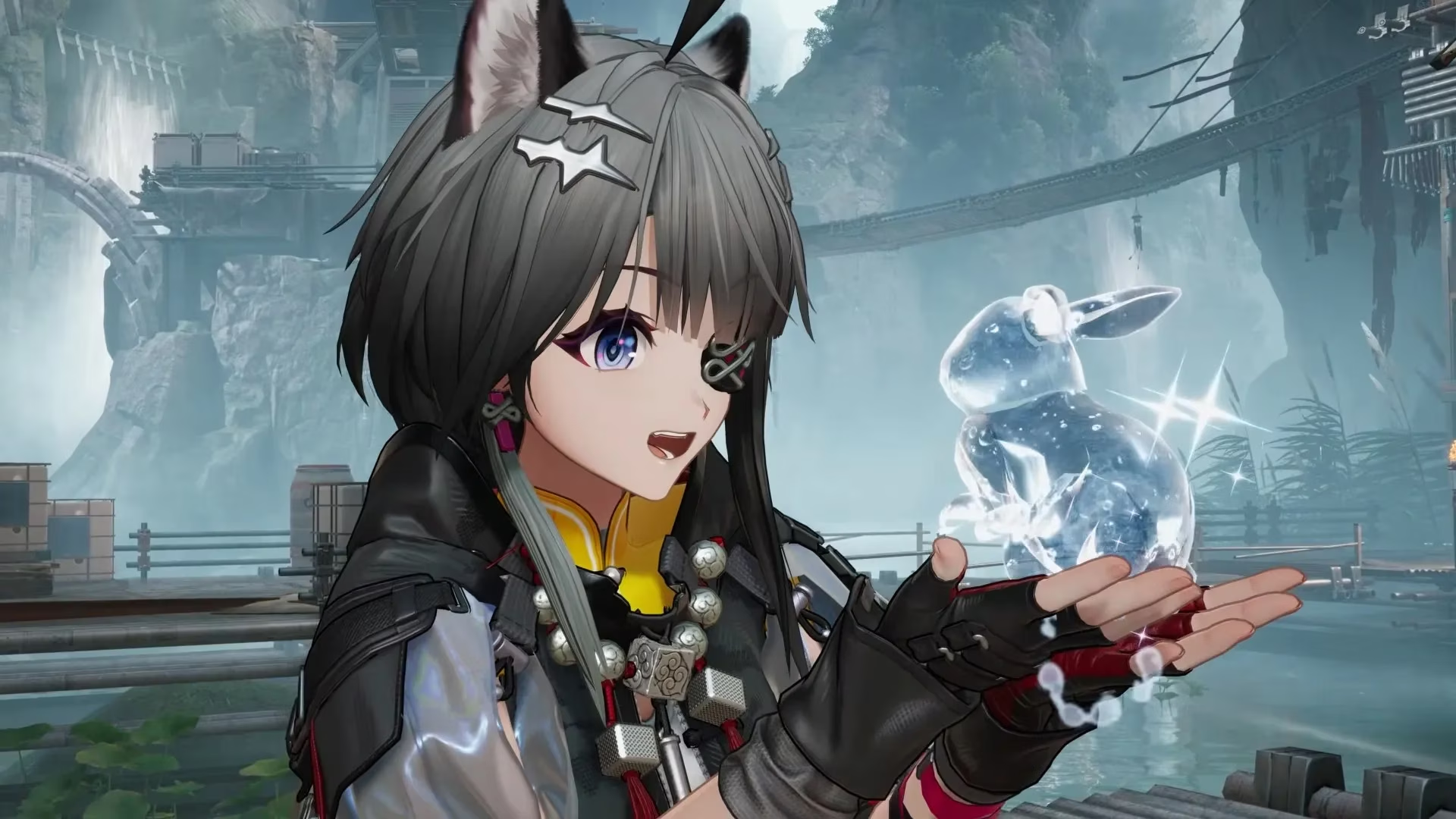
So here we are, two years on. The stone monkey's roar has faded into a resonant hum that underpins a new era. You can feel it in the ambitious projects now greenlit, in the global anticipation for the next big narrative from Chinese studios. The landscape is different. The conversation has evolved. It's no longer a question of if but what next. Wukong didn't just climb a leaderboard; it planted a flag on a new peak, showing a path where deep cultural roots and single-player devotion could create not just a hit, but a legacy. The journey, as they say, has truly begun. And honestly? The view from here is breathtaking.