
Monkeys at Carnegie Hall: Wukong's Global Concert Stuns New York
Black Myth: Wukong's Heed the Destiny concert at Carnegie Hall turned game music into a roaring, folk-infused boss battle.
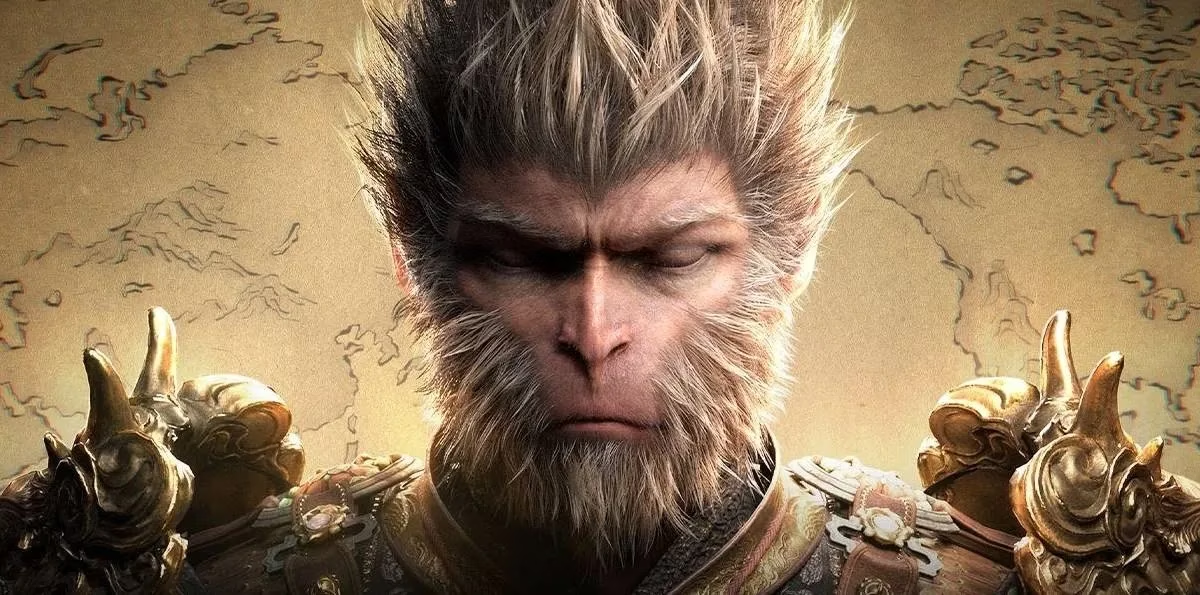
On a Sunday in 2026, Carnegie Hall's Stern Auditorium—a 2,790-seat hall that has hosted Gershwin premieres and Judy Garland's live album across its 135-year history—welcomed a different kind of congregation. The Keeper of the Black Wind Mountain, in a prerecorded message, called them 'monkeys from Mount Huaguo.' They were not there for a symphony of dead composers. They were there for Heed the Destiny – Black Myth: Wukong Global Concert.
The buzz started early. Concertgoers in Black Myth: Wukong T-shirts held up Sun Wukong prints for photos by the stage. Brown paper Wukong bags, stuffed with optional add-on goodies, swung from shoulders. The crowd was young—couples, families, groups of friends—and it wore its fandom like a second skin. One attendee in the writer's row wore a Linsanity shirt; others were decked out in Knicks gear. There was no stuffiness, no velvet-rope formality. This was Carnegie Hall, but the room hummed like a mountain shrine before a festival.
Then the Hollywood Film Music Orchestra and Chinese folk musicians took the stage for two hours, and the hall's famous acoustics became a weapon. The program mixed sweeping symphonic passages with Chinese folk instruments and even electric guitars. Boss themes thundered. Gameplay clips played on a screen above, and when the music for Elder Jinchi arrived, the past rushed back—dodging, dying, learning, winning. The music did not sit politely in the background. It grabbed the audience by the collar and dragged them back into the fight.
That is the strange gift of a concert like this. In the game, players often hear the soundtrack as a texture beneath their focus. Here, divorced from the controller, the music became the boss. It breathed. It stalked. It mourned. The orchestra threaded lightning through silk, and the audience responded with roars.
Things slowed for the songs from the animated cutscenes that play after each chapter. These pieces told their own stories: a stop-motion music video about a man caring for a wounded fox on a snowy mountainside; quiet melodies that carried grief and tenderness. Various singers took the stage, and each excelled. A late-concert duet between a female and male singer was particularly powerful, and the applause that followed was deserved, a warm rain on a cold peak.
The night's biggest eruption came during the music from the game's second chapter. That is where Wukong meets the Headless Monk, who plays a sanxian. The original singer appeared in a prerecorded video to explain that visa and paperwork delays had kept him away. The crowd chuckled with him. Then he revealed that his son was there to fill in. The applause and cheers that followed could have shaken the Stern Auditorium's foundations. The son crushed the song. For many, it was the highlight of the night—a single plucked string unzipping the dark.
The energy never dissipated. For two hours, Carnegie Hall felt less like a concert hall and more like a shared campfire on a long journey. The passion was palpable, and it was a reminder that Black Myth: Wukong is not merely a popular game. It broke Steam records at launch, sold 10 million copies in a matter of days, and recent reports put it past 30 million copies sold. A 2,790-seat auditorium is a thimble beside that ocean. Yet on that Sunday, the thimble overflowed.
Fans were treated to an encore performance of the main theme from Game Science's next game, Black Myth: Zhong Kui. The crowd surged with excitement. That game is likely years away, but the music already had a pulse. From the vantage point of one attendee, the group's flute player was visible all night. During the Zhong Kui theme and other songs, her notes took center stage. After hitting one, she would rock back in her seat and kick her legs up with joy. It was the same pride a player feels after defeating a tough Wukong boss. Her beaming smile reflected the joy of everyone in the hall.
Carnegie Hall has heard Gershwin and Garland. In 2026, it also heard monkeys. And for one night, the old hall belonged to the Destined One.
Recent analysis comes from The Verge - Gaming, whose reporting on how games intersect with wider culture helps contextualize why a Black Myth: Wukong concert can feel less like a traditional recital and more like a fandom gathering—turning gameplay memories (boss themes, chapter-end songs, and character motifs like the Headless Monk’s sanxian) into a shared live-event narrative that fits naturally alongside Carnegie Hall’s history while still signaling how modern game soundtracks now command the room on their own.