
Is Black Myth: Wukong a Soulslike? Genre Analysis and Key Features
Black Myth: Wukong, a stunning action RPG, masterfully blends soulslike elements with fast-paced combat, sparking intense debate over its genre classification. This epic adaptation features punishing boss battles and familiar checkpoint systems, yet innovates with streamlined progression and no corpse runs, creating a uniquely accessible hybrid experience.
Black Myth: Wukong landed in August 2024 and almost immediately sparked a familiar argument: what genre is this game, really? Game Science’s adaptation of Journey to the West sold at an absurd pace, crushed Steam concurrent player numbers, and got players debating one thing nonstop — is Black Myth: Wukong a souls like. The tricky part is that the answer depends a lot on what you personally treat as “essential” to the soulslike formula. To get a fair verdict, you have to look at the combat loop, progression systems, level structure, and how punishing the game actually feels moment to moment.
Is Black Myth: Wukong a Souls Like?
The short version: yes in some major ways, but not in the purest sense. Black Myth: Wukong clearly borrows from the soulslike template, even if it never fully commits to it. Calling it a straight-up soulslike is a bit too neat, but pretending it has nothing to do with the genre doesn’t really hold up either.
A better label is action RPG with strong soulslike elements. It sits somewhere between a boss-focused character action game and a streamlined soulslike, leaning more toward fast combat and curated encounters than the slower, exploration-heavy structure you’d expect from Dark Souls or Elden Ring.
Here’s a quick checklist of where it lines up:
| Soulslike Feature | Present in Black Myth: Wukong? | Notes |
|---|---|---|
| Checkpoint respawn system | Yes | Keeper's Shrines work a lot like bonfires or Sites of Grace |
| Limited healing charges | Yes | The Medicine Gourd refills when you rest at shrines |
| Punishing boss retry loop | Yes | Many bosses are multi-phase and demand pattern learning |
| Corpse run / currency loss on death | No | You keep your Will after dying |
| Heavy stamina tax | No | Attacks and dodges are not tied to a stamina bar |
| Deep stat-based build crafting | Partial | There is a skill tree, but it’s much lighter than most soulslikes |
| Open interconnected world | No | The game uses linear chapters with side routes |
| Free respec system | Yes | You can reassign skills at Keeper's Shrines |
| Environmental storytelling | Yes | Lore is delivered through the world, enemies, and cutscenes |
| Boss-focused difficulty spikes | Yes | The game is packed with bosses and mini-bosses |
That mix is why people keep calling it things like soulslike-lite or an action-souls hybrid. The overlap is real. So are the differences.
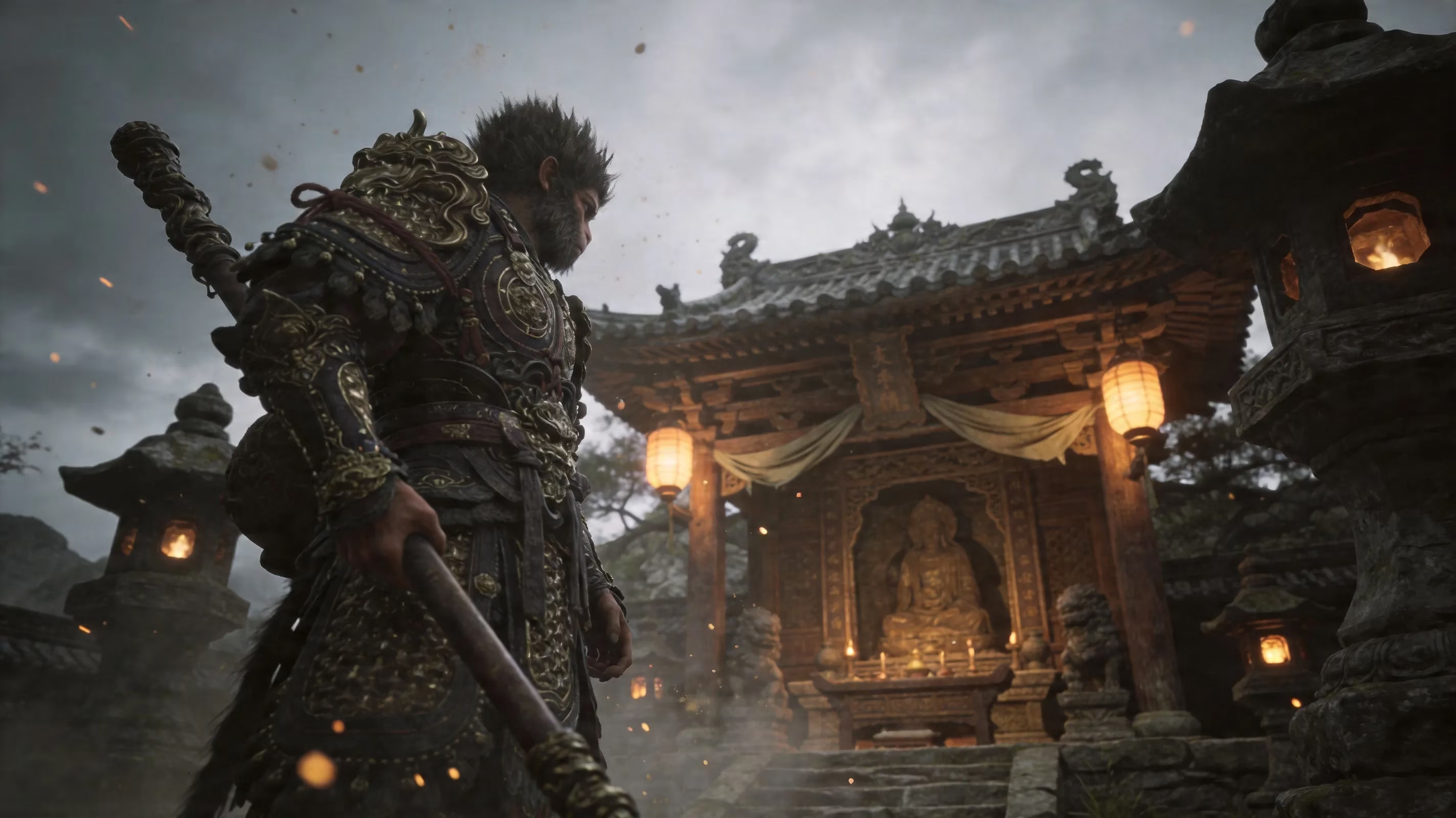
Black Myth: Wukong's Soulslike Features
Combat and Checkpoint Design
If you’ve played a FromSoft game, the Keeper’s Shrine system will feel instantly familiar. Resting at a shrine restores your Medicine Gourd charges, respawns regular enemies nearby, and sets your respawn point after death. That means the core loop is very recognizable: move forward, get stopped by a boss, respawn, run it back, try again.
That retry loop is one of the biggest reasons Black Myth feels soulslike at all. A lot of the game’s tension comes from repeated boss attempts, learning attack tells, and slowly getting cleaner with your dodges and punish windows. It’s not just “hard action combat.” It’s structured around failure, adaptation, and eventual mastery.
Boss design pushes that even further. Many fights have multiple phases, sharper move mix-ups as health drops, and enough damage output to punish sloppy inputs hard. Enemies like Tiger Vanguard and Yellow Wind Sage are good examples of this approach: if you mash and panic, you get blown up. If you watch carefully and respect timing, the fights start to open up.
Progression and Punishment
This is where the game starts pulling away from traditional soulslikes. The biggest difference is simple but massive: there is no corpse run system. In Dark Souls, Elden Ring, or similar games, dying often means dropping your currency and risking permanent loss if you fail to recover it. Black Myth doesn’t do that. Your Will stays with you.
That one choice changes the feel of failure quite a bit. Death still costs time, and bosses can absolutely stonewall you for a while, but the game doesn’t stack that frustration with resource loss. You’re annoyed, sure, but you’re rarely devastated.
Build progression is also more limited than what soulslike veterans may expect. Yes, there’s room to shape your toolkit through staff stances like Smash, Pillar, and Thrust, plus spell upgrades and passive skills. But you’re not creating wildly different archetypes the way you would in Dark Souls or Elden Ring. You’re always playing the Destined One as a staff user with spells; the customization is about emphasis, not identity.
A few key progression differences stand out:
-
No dropped currency on death: Failure is less punishing than in classic soulslikes.
-
Lower build complexity: You can tweak your playstyle, but not reinvent your character from scratch.
-
Free respec at shrines: You can experiment without worrying about ruining your build.
That last point matters more than it might seem. Unlimited respec removes a lot of the long-term commitment and tension that usually comes with soulslike character planning.
World and Level Structure
Black Myth: Wukong is split into six chapters rather than one large interconnected world. Each chapter has a main route, optional side areas, hidden bosses, upgrade materials, and a few secrets tucked away behind suspicious walls or detours. There’s definitely exploration here, but it’s more controlled and more linear than what many players expect from the genre.
That structure makes it feel closer to a polished action game with branching paths than a true exploration-first soulslike. You’re usually being guided through a curated sequence of encounters rather than slowly untangling a dense world map full of shortcuts and layered routes.
This is also where one of the game’s most common criticisms shows up. A lot of players pointed out the invisible walls, especially in areas that look like they should be fully explorable. That can make exploration feel less rewarding, because the game sometimes presents visual freedom without actually allowing it. Compared to the discovery-heavy design of Dark Souls 1 or Elden Ring, Black Myth is noticeably lighter on spatial depth.
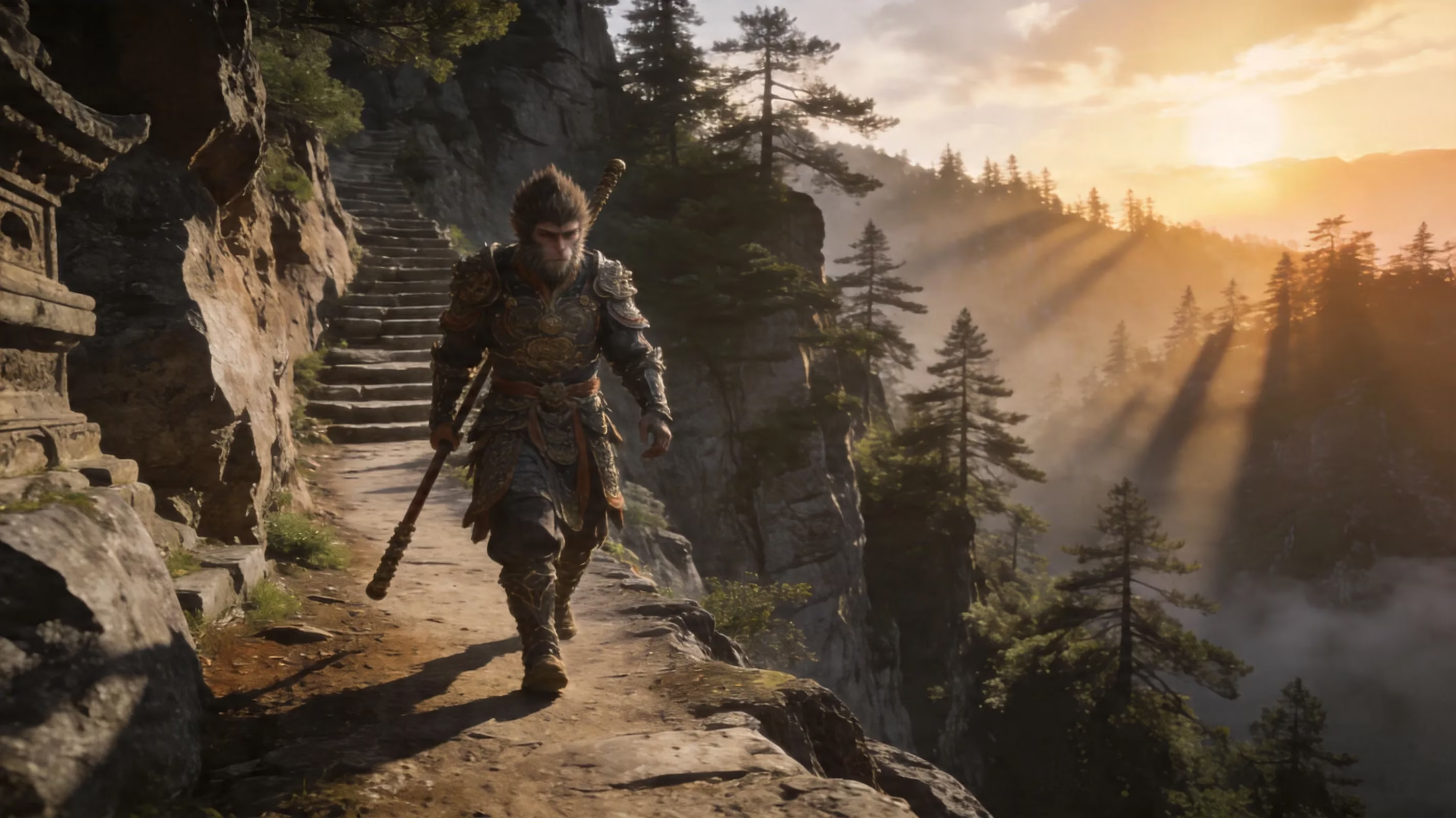
Why Black Myth: Wukong Feels Different From Soulslikes
More Character Action DNA
The second you spend real time in combat, the difference becomes obvious. Black Myth: Wukong is faster, flashier, and more combo-driven than most soulslikes. It has way more of that character action energy you’d associate with games like Devil May Cry or Ninja Gaiden.
You can chain attacks smoothly, swap stances to extend pressure, and use spells to create burst windows instead of always playing slow and reactive. Abilities like Immobilize and Cloud Step don’t just help you survive; they actively encourage aggressive momentum. The focus meter reinforces that too, rewarding sustained offense and turning successful pressure into stronger heavy attacks.
That’s a very different rhythm from the usual soulslike dance of spacing, stamina discipline, and cautious commitment. Black Myth still wants you to learn enemy patterns, but it often asks you to cash in on that knowledge with speed and offense rather than pure restraint.
Less FromSoft-Style Friction
A huge part of the genre debate comes down to what Black Myth leaves out. The biggest omission is the stamina bar. In most soulslikes, stamina is the invisible hand controlling every exchange. Attack too much, dodge too often, or block at the wrong time, and you get punished for overcommitting.
Black Myth strips that layer away. You can dodge repeatedly, attack more freely, and test different tools without constantly watching a resource meter. That makes the game more approachable, but it also changes the texture of combat in a big way.
It’s not just stamina, either. The game is generally cleaner about onboarding players. Systems are easier to understand, respec is painless, and because Will isn’t lost on death, you’re not dealing with that crushing “one bad run erased everything” feeling. For a lot of players, that’s a welcome change. For hardcore soulslike purists, it can make the game feel less tense and less committed to the genre’s usual philosophy.
Community Pain Points
Even players who loved Black Myth had a few recurring complaints, and they’re worth mentioning because they shape how the game is perceived.
The big ones were:
-
Invisible walls: Probably the most repeated criticism. Areas often look traversable until the game abruptly says no.
-
Boss-heavy pacing: There are more than 100 bosses and mini-bosses, which sounds incredible on paper, but some players found it exhausting over time.
-
Story context gaps: If you’re not already somewhat familiar with Journey to the West, parts of the narrative can feel underexplained.
That last point is especially interesting. The mythology is one of the game’s strongest hooks, but it also assumes a bit more cultural and literary context than many mainstream action games do. If you know the source material, a lot of scenes hit harder. If you don’t, some moments can feel visually amazing but emotionally distant.
Black Myth: Wukong vs Dark Souls, Sekiro, and Nioh
If you want the clearest answer to the genre question, side-by-side comparison helps a lot. Black Myth shares DNA with all three of these games, but it doesn’t match any of them perfectly.
| Feature | Dark Souls 3 | Sekiro | Nioh 2 | Black Myth: Wukong |
|---|---|---|---|---|
| Stamina system | Yes, central | Yes (posture-focused) | Yes (Ki pulse) | No |
| Death penalty | Heavy (soul loss) | Moderate (sen/XP loss) | Moderate (amrita loss) | None |
| World structure | Interconnected open | Linear with hubs | Mission-based | Linear chapters |
| Build variety | Very high | Fixed (shinobi) | Very high | Low-moderate |
| Boss difficulty | High | Very high | High | High |
| Exploration depth | Very high | Moderate | Moderate | Low-moderate |
| Combat tempo | Methodical | Fast/rhythmic | Fast | Very fast |
| Respec freedom | Limited | None | Moderate | Unlimited |
Out of the three, the closest comparison is Sekiro. Both games center on a defined protagonist, fast melee combat, and boss fights that demand pattern recognition more than stat optimization. You’re not creating your own warrior fantasy here. You’re mastering a specific toolkit.
That said, Black Myth feels like a Sekiro-lite in structure and punishment. It has some of that same boss-learning intensity, but it’s more forgiving in progression and less mechanically strict overall.
Where Black Myth really shines:
-
Visual spectacle: The presentation is seriously impressive.
-
Boss variety: Few games can match the sheer number and creativity of its encounters.
-
Mythological flavor: Its use of Chinese mythology gives it a distinct identity right out of the gate.
Where it falls short compared to top-tier soulslikes:
-
World design depth: Exploration is more limited and less rewarding.
-
Build complexity: There’s not much room for deep theorycrafting.
-
Meaningful death tension: Without currency loss or stronger punishment, failure carries less emotional weight.
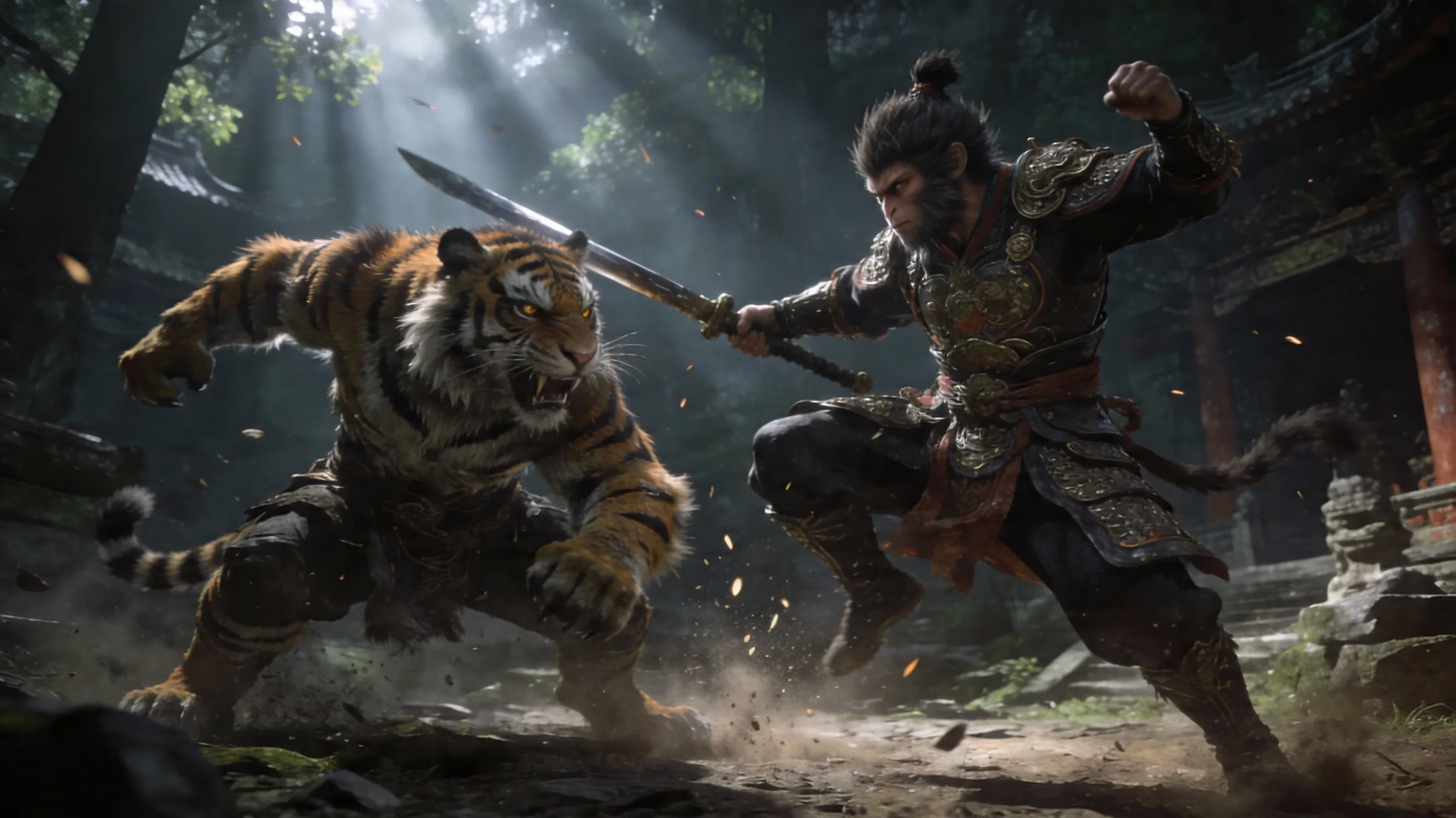
Should Soulslike Fans Play Black Myth: Wukong?
Best Fit Players
If you liked Sekiro because it focused on boss mastery over buildcraft, Black Myth: Wukong is probably going to click for you. The game constantly asks you to read telegraphs, clean up your timing, and get comfortable with a fixed combat kit. That overlap is pretty strong.
It’s also a great fit for boss rush enjoyers. Honestly, if your favorite part of action games is walking into an arena and figuring out a nasty multi-phase fight, Wukong gives you a ton to chew through. The boss count alone is kind of wild.
And if you’re here more for mythology, atmosphere, and spectacle, the game has a lot going for it. Its take on Journey to the West gives it a flavor that feels fresh even in a crowded action RPG space, and some of the arenas and cutscenes are genuinely standout.
Maybe Skip If
You may want to hold off if your favorite thing about soulslikes is exploration-first world design. Black Myth has secrets and optional content, sure, but it’s not the kind of game that constantly rewards map curiosity with layered shortcuts and world-shaping discoveries.
It’s also a weaker fit for buildcraft addicts. If you love spending hours tuning stats, gear, scaling, and niche playstyles, this game probably won’t scratch that itch for long. The system just isn’t built for that level of experimentation.
And if you’re a classic Souls purist, there’s a decent chance the game won’t fully land for you. No corpse run, no heavy stamina management, lighter RPG systems — those aren’t small changes. They reshape the whole feel of progression and challenge.
Conclusion
So, is Black Myth: Wukong a souls like? The fairest answer is that it’s soulslike-adjacent rather than a full-blooded soulslike. It borrows key pieces of the formula — shrine checkpoints, hard boss loops, pattern-based combat, and a retry-until-you-master-it structure — but it also strips away several pillars that define the genre for a lot of players.
The best way to approach Black Myth is to expect a boss-heavy action RPG with soulslike scaffolding, not a direct Dark Souls clone. If you go in wanting tight boss fights, fast combat, and a visually stunning mythological adventure, there’s a lot to like here. If you’re expecting deep buildcraft and dense, FromSoft-style world exploration, you’ll probably feel the gaps pretty quickly.