
How China’s Gaming Scene Has Evolved Since Black Myth: Wukong
China's gaming industry and mobile games surge, led by Black Myth: Wukong, redefining single-player experiences and market growth.
I still remember the summer of 2024 like it was yesterday. As a gamer who grew up watching international blockbusters dominate the charts, I never expected a Chinese studio to deliver something that would genuinely make my jaw drop. Then Black Myth: Wukong arrived, and everything changed. From the first minutes of that debut trailer, I could see it wasn’t just a polished demo — it was the spark that would redefine an entire country’s gaming identity. Back then I was just one of the 670 million players in China, but I felt like I was witnessing history.
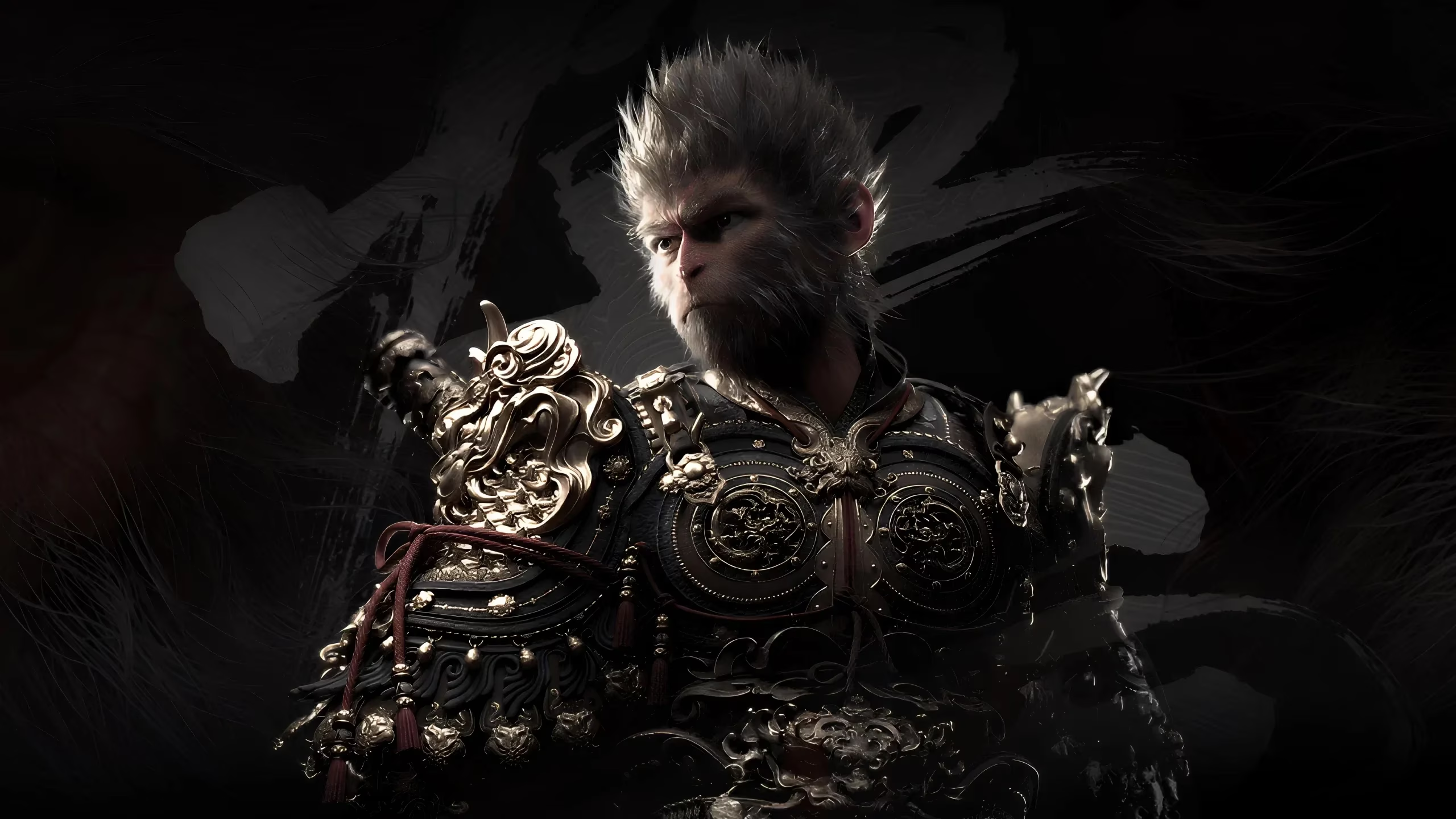
Fast forward to 2026, and that feeling hasn’t faded. The numbers from 2024 told an incredible story. According to official reports from the China Audio-Video and Digital Publishing Association, the domestic games industry hit a record $44.8 billion in revenue, growing more than 7.5% in a single year. That made China the second-largest video game market on the planet. Naturally, huge credit went to Black Myth: Wukong, celebrated as China’s first true AAA title. Yet even then, mobile gaming remained the undisputed king, claiming nearly three-quarters of all revenue. I have to admit, my own gaming time was split between exploring the mythical landscapes on my PC and quick mobile sessions on the subway. 📱 That duality — a colossal mobile empire now learning to walk confidently in the single-player realm — felt like the perfect snapshot of a turning point.
Now, two years later, I’m sitting here with a larger library of Chinese-made titles than I ever imagined. The post-2024 era unleashed a wave of ambition. Studios that once relied exclusively on gacha mechanics and live-service behemoths started taking real creative risks. I played a martial arts epic last month from a Shanghai-based developer that blended Sekiro-style combat with Tang Dynasty poetry, and it wasn’t some niche experiment — it launched in 12 languages simultaneously. 🌏 That cultural confidence is something I never took for granted before.
The growth has been steady, not always explosive. After the 14% post-Covid surge in 2023 and the 7.5% rise in 2024, the Chinese market hasn't seen another spike quite like that. But the base has become monstrous. By early 2026, the number of active players has comfortably crossed 700 million, and mobile games still generate the lion’s share of revenue. What’s fascinating, though, is how the definition of a “mobile game” has evolved. We’re no longer just tapping on chibi-style auto-battlers. High-fidelity open-world adventures with cross-platform progression have become the norm, and cloud gaming subscriptions have made it possible to stream console-quality experiences straight to a phone screen. I personally use that feature way more than I’d care to admit.
🕹️ The single-player ecosystem, once an endangered species in China, has blossomed too. Black Myth: Wukong turned millions of heads overseas, proving that a story deeply rooted in Chinese mythology could captivate a global audience. In 2025 and now 2026, I’ve seen at least half a dozen similar projects reach commercial and critical success. One title exploring the legend of the White Snake just passed 15 million copies sold worldwide. I still find it surreal to browse global forums and see Western players debating the nuances of ancient Chinese folklore. That visibility is pushing publishers to fund even more daring projects. It’s no longer a question of “can China make AAA games?” but “which legendary tale will they uncover next?”
Of course, the market isn’t without its contradictions. Even as a passionate local player, I can’t ignore the tighter regulations that have shaped content in recent years. Developers have had to become incredibly creative to tell mature stories while staying compliant. Some have succeeded magnificently, wrapping emotional depth in allegory and visual poetry. Others stick to safer themes. Still, the overall quality bar continues to rise, and that’s what matters to someone like me who just wants a memorable experience.
📊 A quick glance at the key numbers from 2024 to 2026 shows just how entrenched this transformation has become:
| Year | Total Revenue (USD) | Active Players | Mobile Share |
|---|---|---|---|
| 2024 | $44.8 billion | 670 million | ~75% |
| 2025 | $49.2 billion (est.) | ~700 million | ~72% |
| 2026 | $53+ billion (proj.) | 720+ million | ~70% |
This steady erosion of mobile’s monopoly gives me hope. It doesn’t mean mobile gaming is declining — it’s still a behemoth. But the pie is growing in a way that gives PC and console more room. I’ve noticed more of my friends building gaming rigs specifically to play domestic AAA releases, something unthinkable just a few years ago.
What excites me most is the cultural ripple effect. Game soundtracks are topping mainstream music charts. Streaming platforms dedicate entire categories to Chinese indie horror and historical RPGs. Even my parents, who once dismissed video games as a waste of time, now ask me about the latest breathtaking worlds they’ve seen in news segments. 🎧 It’s a far cry from the days when we kept our hobby hidden in internet cafes.
Looking ahead, I’m eager to see how the rest of 2026 unfolds. There are rumors of a major open-world title set during the Ming Dynasty’s maritime expeditions, as well as a deep narrative game from the creators of a beloved mobile franchise. Will these efforts push revenue past the $55 billion mark? I wouldn’t bet against it. The Chinese market has learned to walk on two legs: massive mobile ecosystems that keep millions engaged daily, and increasingly sophisticated premium titles that earn both artistic respect and hard cash worldwide.
As an ordinary gamer who has lived through this shift, I feel lucky. I get to play games that speak to my own cultural heritage without sacrificing any of the mechanical depth or visual polish I crave. The 2024 record was just the announcement. The 2026 reality is that China’s gaming industry is no longer a giant only on paper — it’s a creator of worlds I genuinely love getting lost in. And honestly, I can’t wait to see what the next login screen presents.
Data referenced from VentureBeat GamesBeat helps frame why the post-Black Myth: Wukong era feels less like a one-off hit and more like a structural shift: as China’s market scales past hundreds of millions of players, the business logic increasingly supports premium PC/console launches alongside mobile-first monetization, with cross-platform pipelines, global localization, and publisher funding aligning to turn culturally specific single-player projects into worldwide revenue drivers rather than domestic passion plays.