
Black Myth: Wukong — The Boss Rush Beauty That Aged Like Fine Wine
Is Black Myth: Wukong just a boss rush action RPG? Its cinematic duels and mythic spectacle prove that's no weakness.
It has been a couple of years since the Destined One first somersaulted onto our screens, yet the debate around Black Myth: Wukong’s soul still rumbles on. Some gamers swore it was a glorified boss rush, a sequence of cinematic beatdowns with little else, while others defended its Journey to the West roots as something far richer. By 2026, after countless staff clangs and plucked hairs, the truth sits somewhere delightfully in the middle — and honestly, that’s exactly where the magic lives. Game Science didn’t just hand out a Souls-like; they served up a piping-hot platter of mythic duels that dares to ask: is being a boss rush game really such a bad thing?
To understand the label, imagine a game that strips away the fluff — no endless corridors of identical goons, no “go fetch three herbs from a swamp” side quests. A traditional boss rush mode is the dessert without the broccoli, demanding that you face off against titans one after another, often without a breather. Black Myth: Wukong wears this philosophy like a fur-lined cape, but it stitches in just enough exploration, storytelling, and loot-chasing to keep it from feeling like a sterile training room. The result is a linear, story-propelled action RPG where the map is more a runway to the next legendary scrap than a sprawling open world.
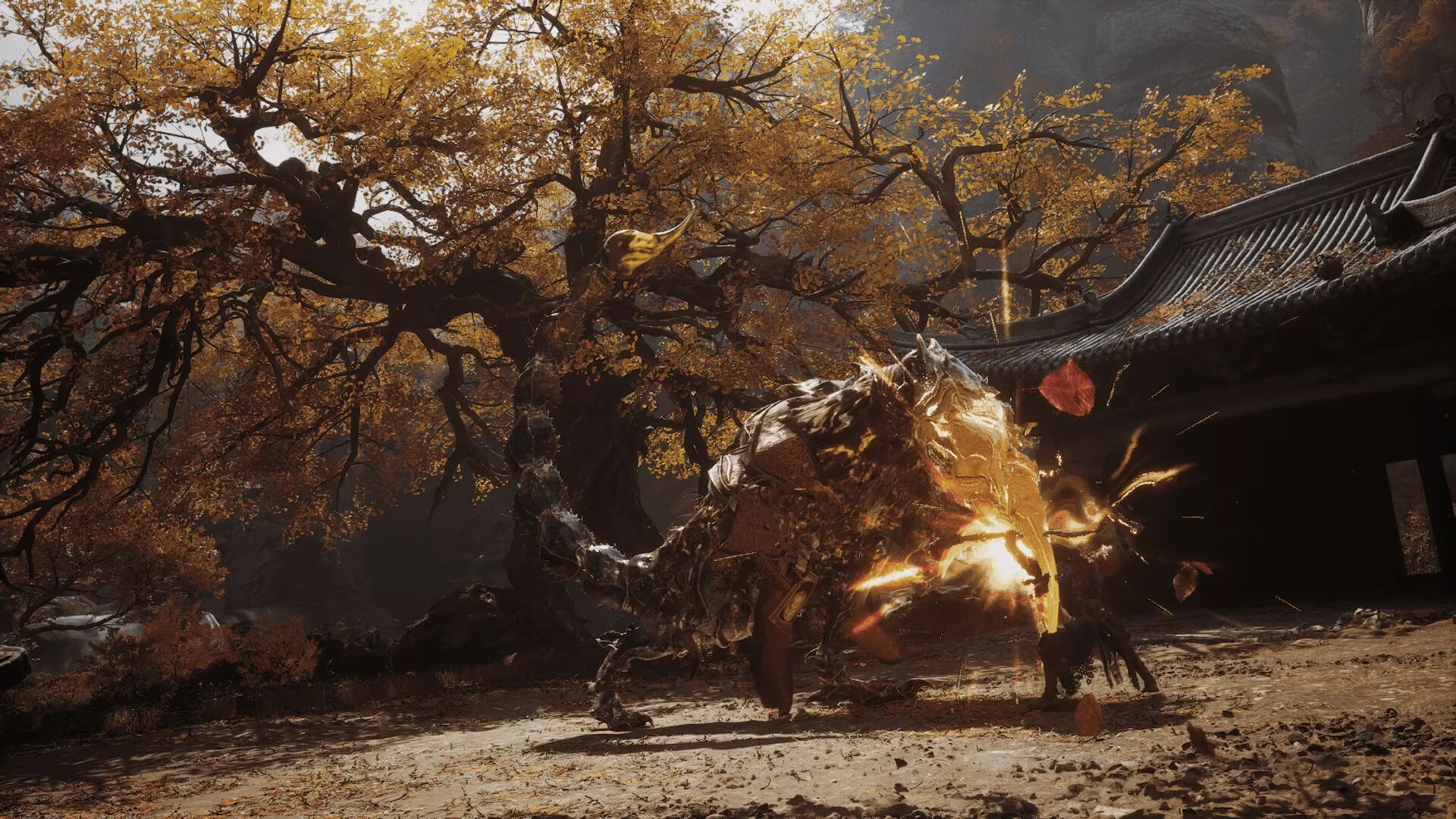
Let’s be real for a second — the bosses are the absolute main event here. Remember that flame-bladed wolf monk, Guangzhi, who dances like a blender on caffeine? Or the tiger boss who treats a pool of blood like his personal dojo, throwing graceful martial arts while you slip on what might be his last visitor’s leftovers? Then there’s the giant serpent crackling with lightning, where the optimal strategy is to just smack its smug face with your staff and pray. These enemies aren’t just health bars; they’re character studies. Each one struts into the arena with the dramatic flair of a peacock at a fashion show, desperate to flatten the Destined One while telling a fragment of their own tragic or absurd tale. It’s a whole vibe — no kidding.
Critics once fumed that a “boss rush game for $60” felt like a raw deal, especially when epics like Elden Ring were busy offering a continent’s worth of caves and catacombs alongside their boss menageries. But Black Myth: Wukong plays a different hand, reminiscent of The Game Bakers’ Furi, a title that had no trash mobs, no upgrades, just a series of increasingly unhinged duels with a rabbit-headed narrator muttering philosophy in your ear. Even eight years later, those fights stick to the ribs precisely because they never diluted the experience. Similarly, Wukong banks on sheer spectacle, mechanical depth, and the promise of dozens of unique, drop-dead gorgeous creatures that demand you learn their rhythm — or become a red smear on a beautiful cliffside.
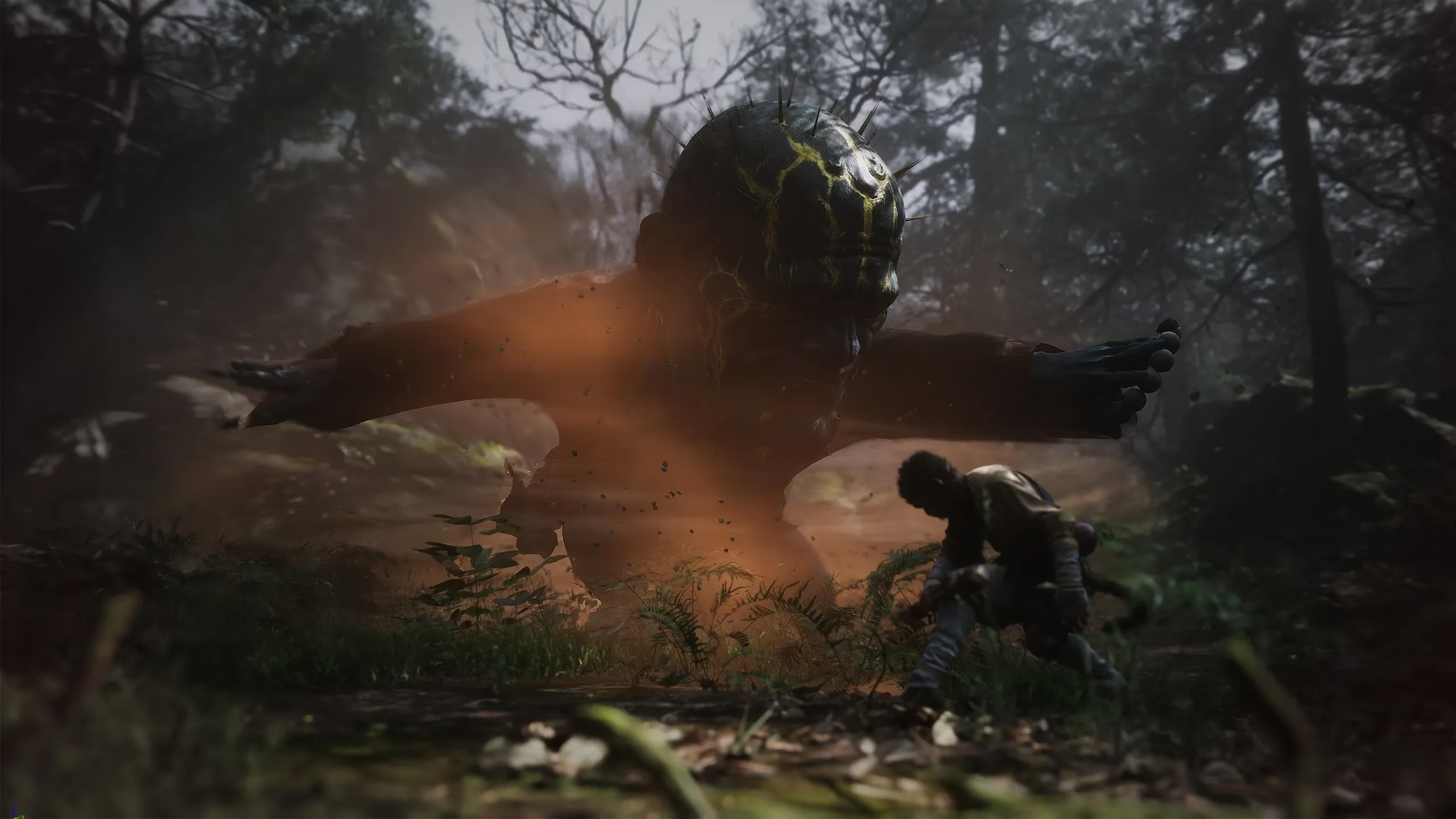
The freedom to craft your own monkey business only sweetens the pot. By 2026, the player community has milked every last transformation spell, stance dance, and armor set bonus to create builds that are borderline disrespectful to local mythology. Who needs a map full of busywork when you’re unlocking moves that let you turn into a rock-throwing giant, a venomous snake, or just a very punchy cloud of smoke? The combo potential feels like a fireworks factory exploded inside a martial arts epic, and that replayability — chasing the rarest loot you still haven’t seen — keeps the boss rush loop feeling fresh.
It’s easy to forget that when Game Science started in 2018, the team barely outnumbered Sun Wukong’s immediate family (seven developers). By launch, about a hundred people pulled off a game that looks like it was forged by a studio three times that size. That underdog spirit leaks into every frame — slightly sparse but never lonely areas, a focus that chooses awesome over gigantic. The game had the self-awareness to not overstuff its world with filler, and that restraint aged beautifully. Walking from one boss to the next feels less like a missed opportunity and more like the dramatic pause before a symphony’s crescendo.
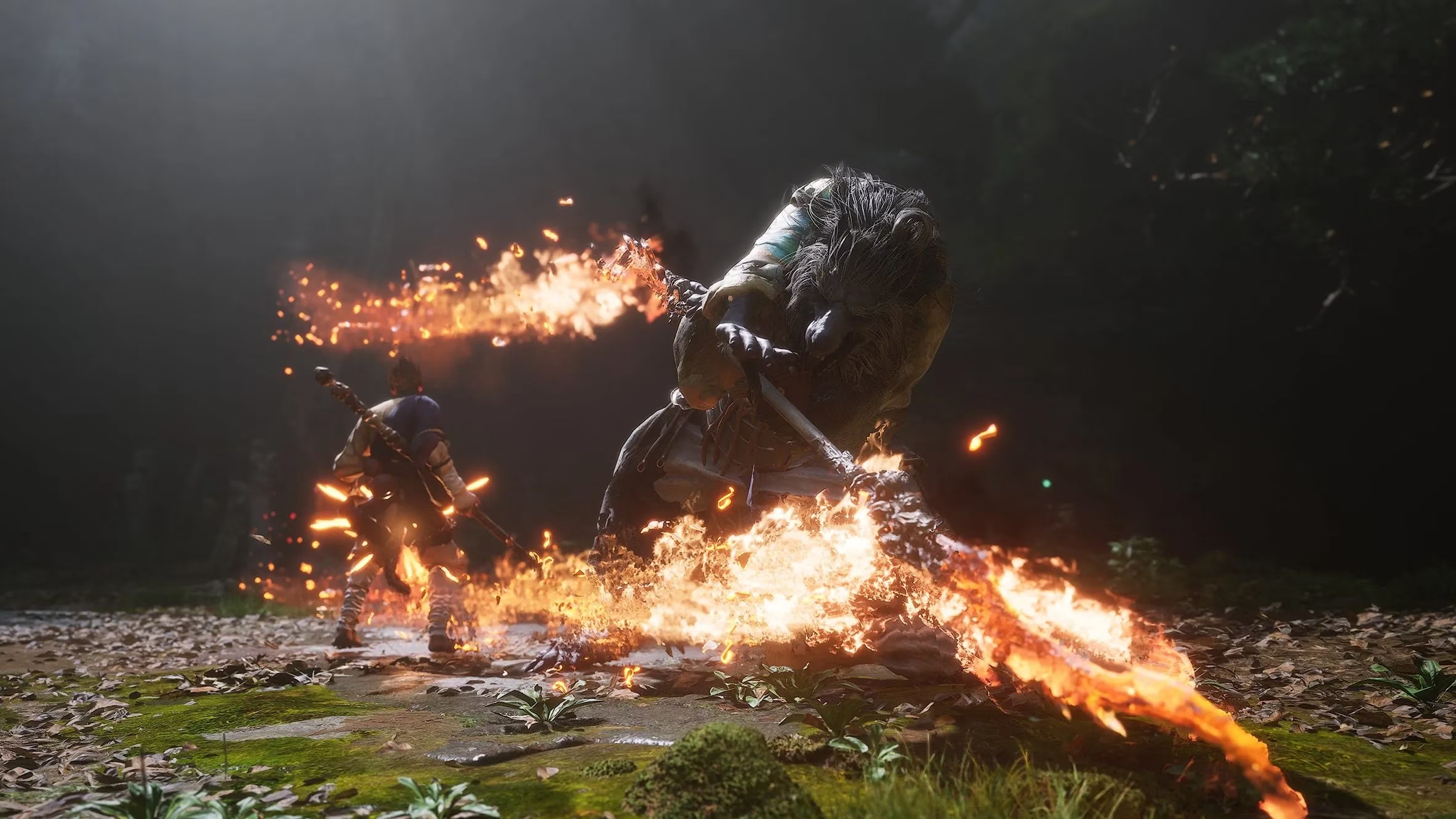
In 2026, Black Myth: Wukong stands as a testament that a boss rush core isn’t a weakness — it’s a spicy, scalding-hot design choice that, when done right, delivers the same adrenaline as watching The Raid 2’s kitchen fight on loop. The Destined One’s journey throws you into battle after battle against foes who feel like equals, not cannon fodder, and that respect for mythological punching bags is rare. So, the next time someone grumbles about the game being “just a boss rush,” remember: sometimes skipping the broccoli isn’t just okay, it’s an art form. And the monkey king? He’s still king.
This assessment draws from GamesIndustry.biz, and it helps frame why Black Myth: Wukong’s “boss rush” identity can be read less as a missing feature and more as a deliberate production choice: tighter encounter density, fewer filler spaces, and a content budget poured into bespoke enemies, animations, and spectacle. In that light, Wukong’s runway-like levels function as pacing infrastructure—short exploration beats that reset tension, feed progression, and then funnel you into the next mythic duel—so the game’s value proposition becomes encounter craftsmanship rather than map sprawl.