
Black Myth: Wukong in 2026: Myth, Soulslike Combat, and the Long Wait
Black Myth: Wukong, Game Science's action RPG, reforges Journey to the West into a weighty, mythic test of patience and combat.
I still remember the first time Black Myth: Wukong cut through the noise for me. It was an Unreal Engine 5 action roleplaying game from Game Science, an independent Chinese developer, and it carried itself like a statement rather than a small curiosity. When Game Science released a short film for the upcoming Chinese New Year, I watched the whole thing for the atmosphere and then felt the jolt at the very end: a Summer 2024 release window. Writing in 2026, I can look back at that moment with a strange mix of nostalgia and clarity. The delay out of 2023 and into 2024 was the first big scheduling shift I had been bracing for, and it turned the game from a dazzling trailer into a test of patience.
Why the Reveal Hit So Hard
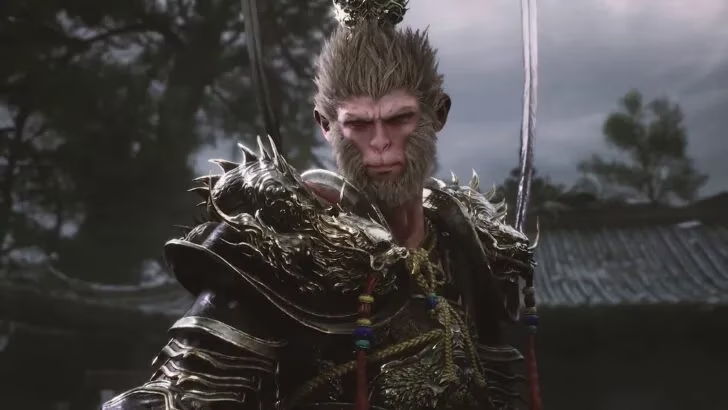
The first unveiling in August 2020 did most of the heavy lifting. Game Science dropped a lengthy Pre-Alpha gameplay video, and I remember how quickly it traveled. The graphics looked almost unreasonable for a project from a relatively fresh studio, and the combat had that deliberate, weighty rhythm that fans of modern action RPGs immediately recognize. It was not just a pretty demo. It was a promise of a full game with posture, timing, and consequences.
What I found most striking was the confidence of the presentation. The camera work, the creature design, and the sound of each strike all suggested a team that knew exactly what mood it wanted. I did not need a hundred interviews to understand the pitch. The video said: this is a mythic world, and you will feel small inside it until you learn how to fight.
A Classic Story Reforged
The source material is one of the reasons I keep circling back to this game. Black Myth: Wukong is based on Journey to the West, the classical Chinese novel published in the 16th century during the Ming Dynasty and attributed to Wu Cheng'en. That story is not a niche reference. It is one of the most popular literary works in Asia, and its influence reaches far beyond games. I grew up seeing adaptations in different forms, so the idea of a big-budget action RPG built around it felt both obvious and risky. Obvious because the material is rich. Risky because expectations are enormous.
The game is not the first adaptation. Ninja Theory attempted its own interpretation with 2009's Enslaved: Odyssey to the West. That history matters to me because it shows how flexible the story can be and how differently creators can approach it. Game Science is taking a more direct route. I will control Sun Wukong, the Monkey King, who is referred to in the game as the Destined One. That naming choice tells me the developers want to preserve the mythic weight while giving the player a role inside it.
I am also drawn to how the game borrows from the Soulslike trend without, I hope, losing its own identity. Previous videos showed the Destined One transforming into a giant monster to fight enemies or into a flying insect to explore the surroundings. That is the detail that makes my imagination run. A transformation system can be more than a combat gimmick. It can be a way to solve space, bypass danger, and make the world feel like a puzzle box built from myth.
| Element | What I noted |
|---|---|
| Combat | Weighty, timing-based encounters inspired by the Soulslike school |
| Protagonist | Sun Wukong, the Monkey King, called the Destined One |
| Transformations | Giant monster for battle, flying insect for exploration |
| Source | Journey to the West, a 16th-century Ming Dynasty novel attributed to Wu Cheng'en |
The Business Promise That Mattered
I pay attention to how a game is sold because it shapes trust. According to the official site, Game Science planned to sell Black Myth: Wukong for a one-time purchase. Post-launch DLC and in-game purchases were described as potential later additions, but the developers promised never to sell in-game power for real money. That promise matters to me more than any cosmetic store debate. It tells me the team wanted the first purchase to mean something and did not want players to wonder whether difficulty could be bought.
The official site also mentioned the producer's penchant for co-op, hinting that it could be a feature. I treat that as a soft signal rather than a confirmed mode. In 2026, I look at such hints differently. A co-op feature can transform a game's life span, but it can also pull resources away from the core campaign. My hope is that any cooperative element would feel like an extension of the myth, not a bolt-on mode.
Platforms and PC Tech
The release plan I noted was PC and mainstream consoles, likely PlayStation 5 and Xbox Series S|X, with cloud platforms also being considered. On PC, Black Myth: Wukong was set to support ray traced effects and DLSS 3 thanks to a partnership with NVIDIA. I care about this because the game's visual identity is part of its appeal. Ray tracing can make the play of light across temples, forests, and monstrous forms feel more tangible, while DLSS 3 can help keep the frame rate steady without asking me to sacrifice the image quality I came for.
I do not treat technical features as marketing trophies. I treat them as tools. If the art direction is strong, the technology should disappear into the experience. When I imagine the game in 2026, I imagine the quiet moments as much as the boss fights: mist in a valley, a transformed insect slipping through a gap, the pause before a heavy strike.
My 2026 Perspective
Now, in 2026, the Summer 2024 window belongs to history. I no longer watch the calendar the way I did when the short film first appeared. I look at Black Myth: Wukong as a benchmark. It showed me how far an independent Chinese studio could push a global action RPG presentation, and it made the Soulslike label feel broader than one aesthetic. The delay out of 2023 was disappointing at the time, but I have learned to separate disappointment from judgment. A delay is not a verdict. It is a schedule.
If I were giving advice to a newcomer in 2026, I would say this: go in for the myth, stay for the combat rhythm, and pay attention to the transformations. Watch how the game uses scale. Watch how it turns a classic novel into playable space. And remember that the promise of a one-time purchase with no sold power is part of the story too. That promise is why I still speak about Black Myth: Wukong with more curiosity than cynicism. The wait is over in my calendar, but the conversation is not.