
Black Myth: Wukong and the Full Ray Tracing Showcase That Aged Well
Black Myth: Wukong's full ray tracing delivers multi-bounce lighting, mirror-like reflections, and world-first particle reflections.
By 2026, the launch-night frenzy around Black Myth: Wukong has cooled into a comfortable afterglow, but for a certain PC builder named Mara, the game is still the go-to stress test. She keeps a save file parked near a rain-slick shrine just to watch puddles behave like polished bronze. It is a small ritual, but it says plenty: two years after release, the title remains a reference point for full ray tracing done with ambition, not just a checkbox. Back in August 2024, NVIDIA pulled back the curtain on the game’s full ray tracing implementation before the August 20 launch, and the details were no small feat.
Lighting That Bounced Twice
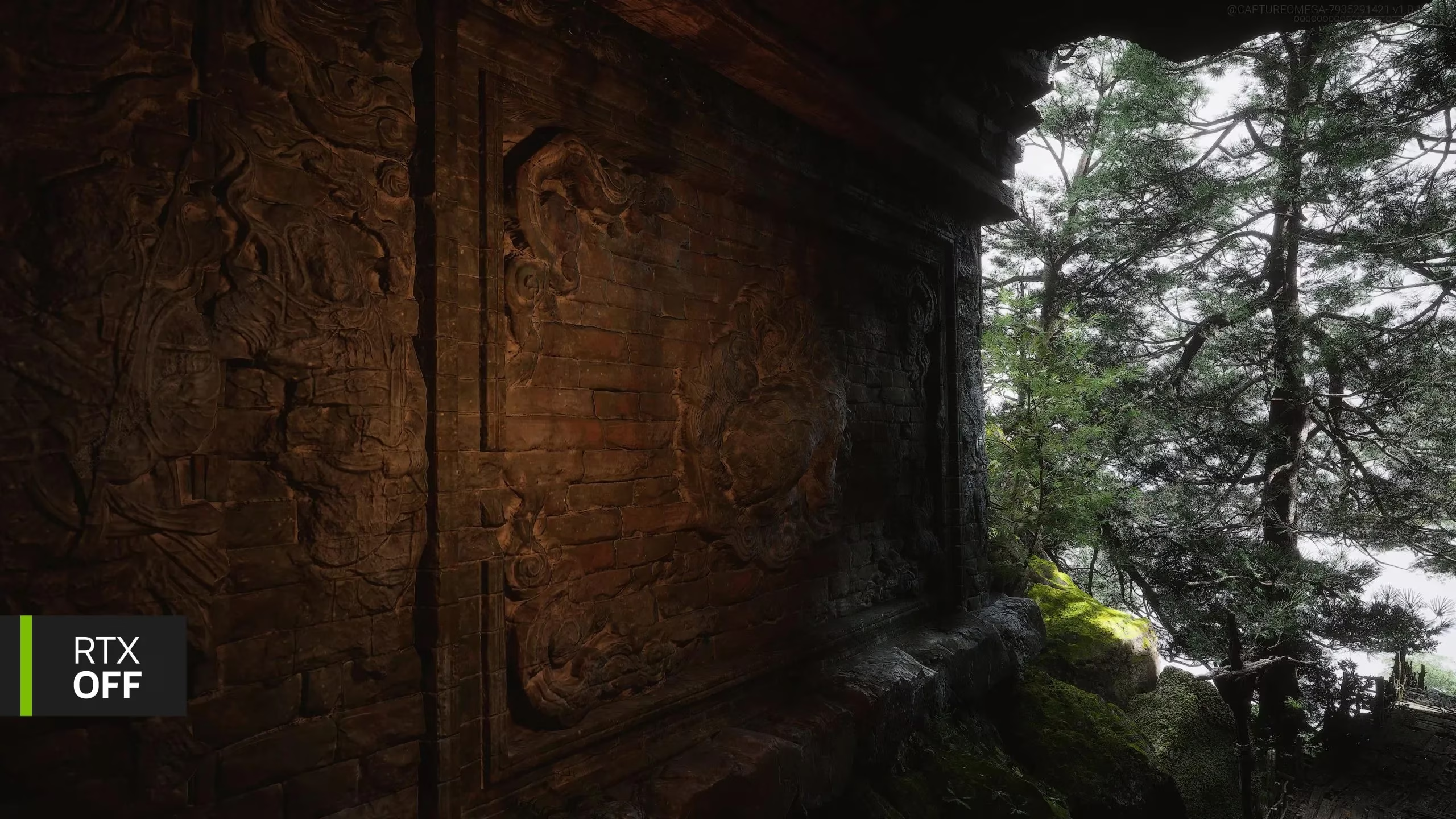
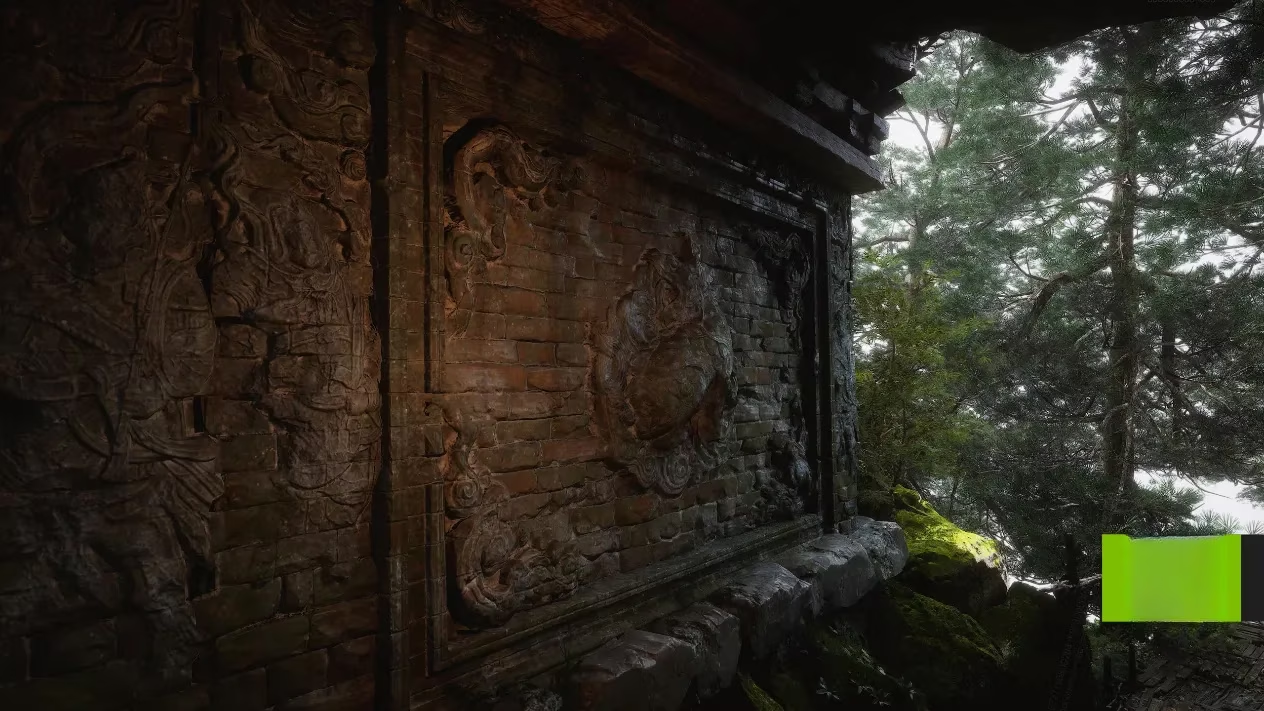
The first headline was multi-bounce ray-traced indirect lighting. In plain English, natural colored light could bounce up to twice through a scene, creating more realistic indirect lighting and occlusion. A unified algorithm handled scenes and objects with greater accuracy, so caves, courtyards, and temple interiors felt less like painted backdrops and more like places with weight. Mara noticed it first in the soft glow around corners: light had memory. It did not simply stop at the first wall; it picked up color and carried it.
Reflections With a Mirror’s Memory
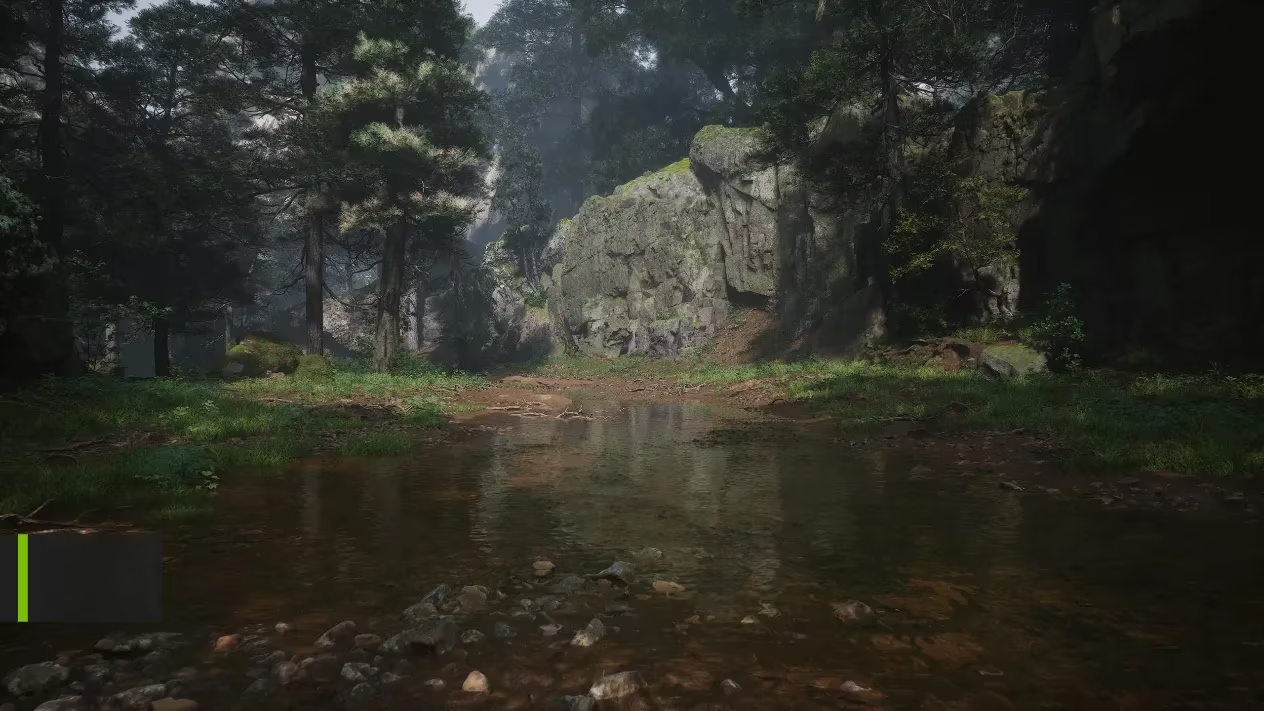
Ray traced reflections were the next piece of the puzzle. Compared to screen space reflections, they more closely mirrored their surroundings, included bounced details, and rendered at full resolution. That combination accentuated the world and enhanced immersion. In NVIDIA’s comparison shots, still puddles became mirror-like surfaces with far greater detail once ray tracing was switched on. Mara called it the difference between a wet floor and a second sky. For a game built on mythic atmosphere, that kind of eye candy was not just decoration; it was world-building.
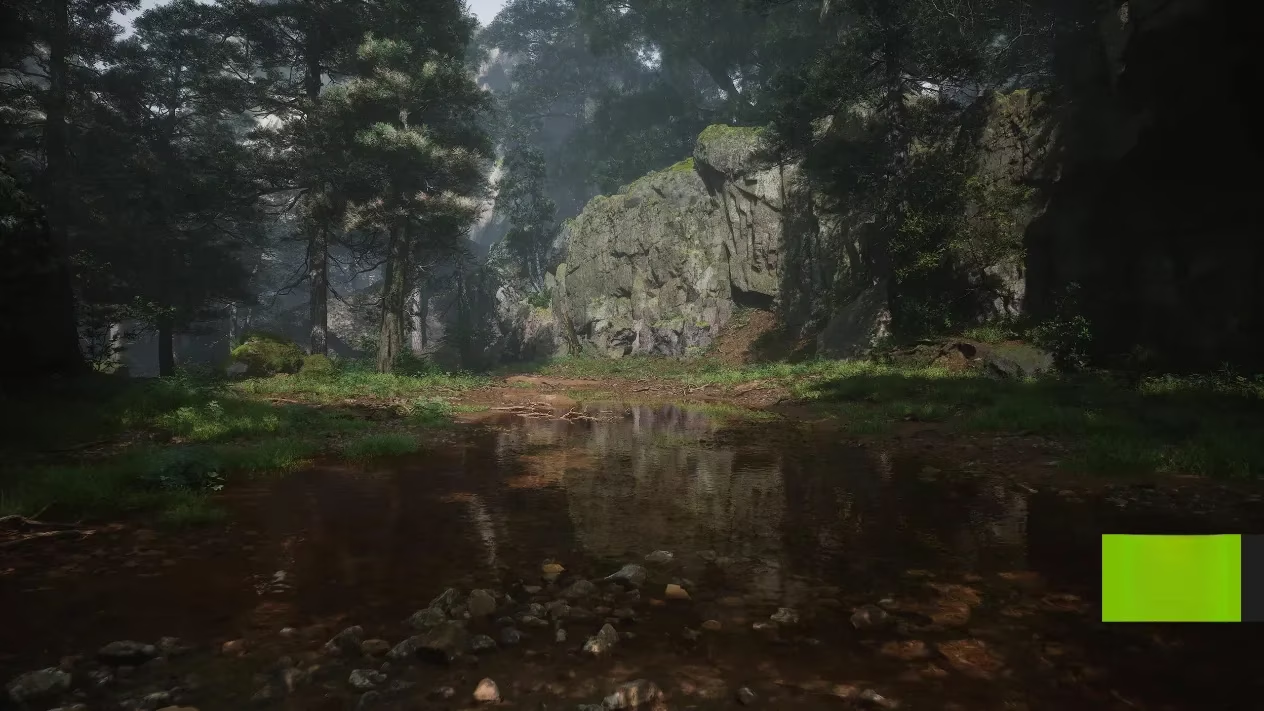
The World-First Party Trick
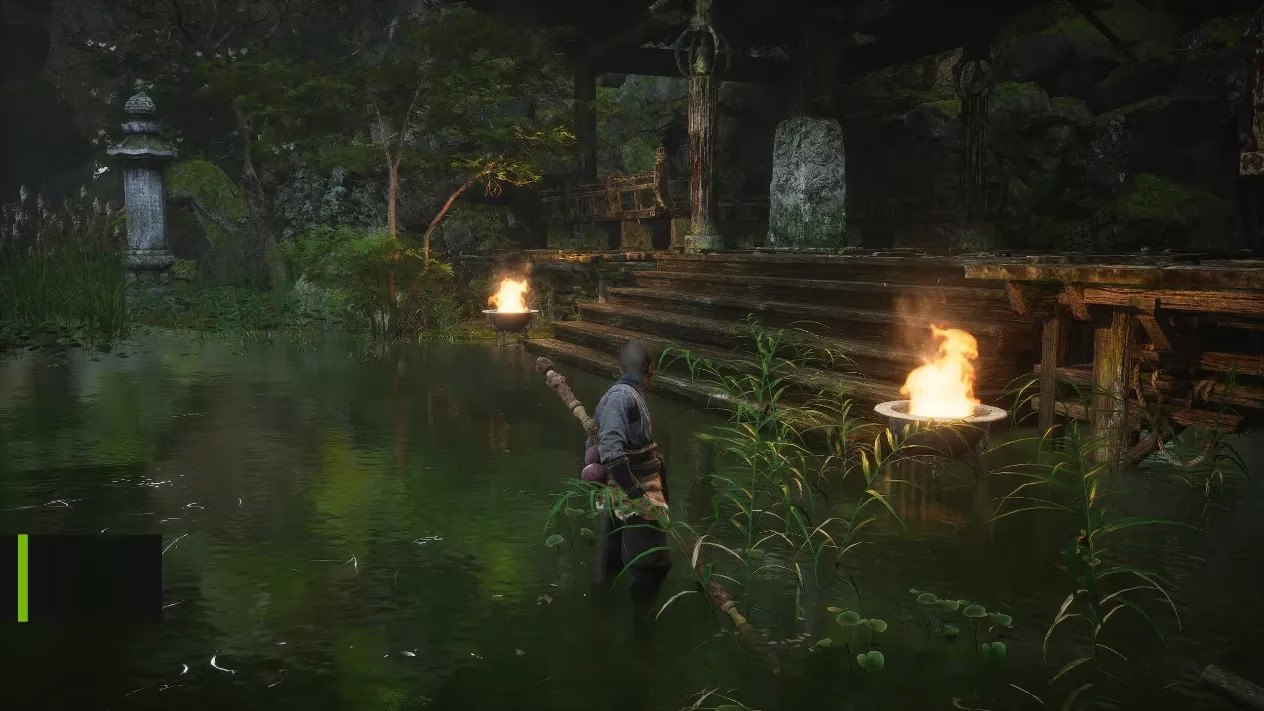
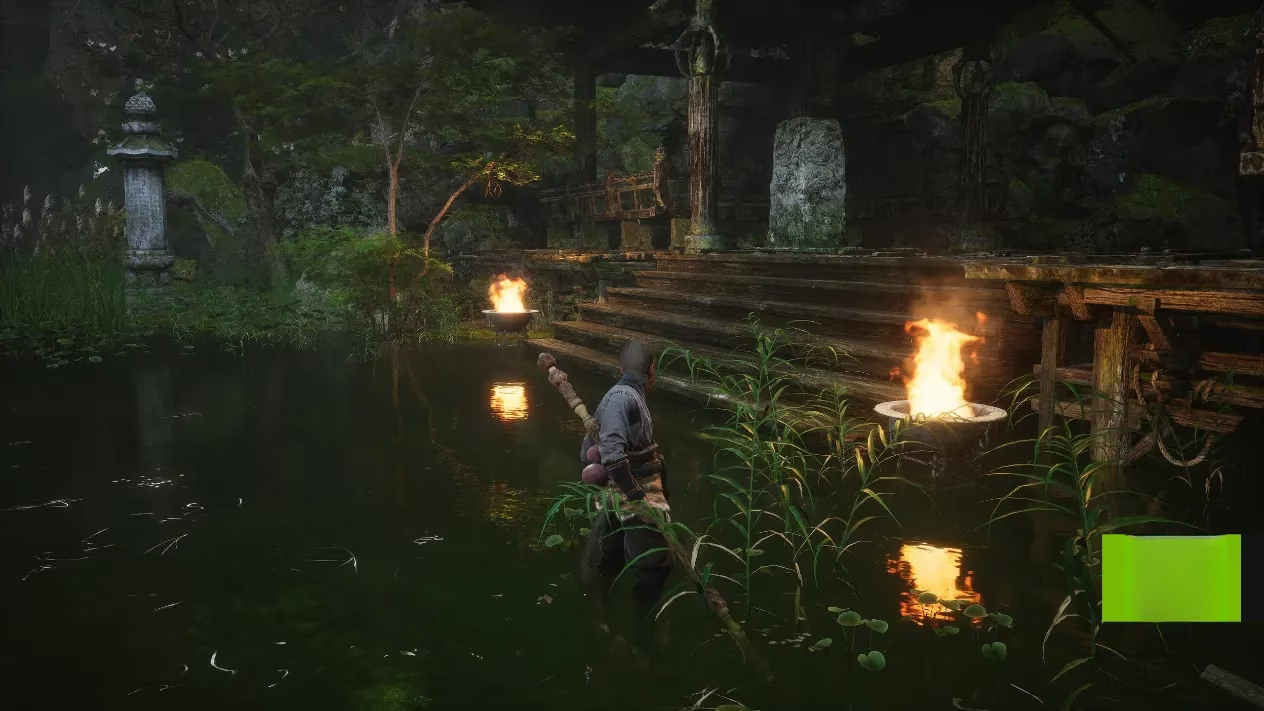
NVIDIA also revealed that it had worked with Game Science to implement a world-first technique called ray traced particle reflections. This rendered order-independent transparencies for large sprite sets using two-level ray tracing, efficiently rendering the game’s particle system in real-time reflections. In simpler terms, fire, sparks, and other particle effects could show up in reflective surfaces instead of vanishing from the mirror world. The comparison made the point bluntly: with ray tracing disabled, fire was not reflected at all. With it enabled, the flames joined the scene. It was the icing on the cake, and a clever bit of bragging rights for the PC version.
Caustics and Shadows: The Devil in the Details
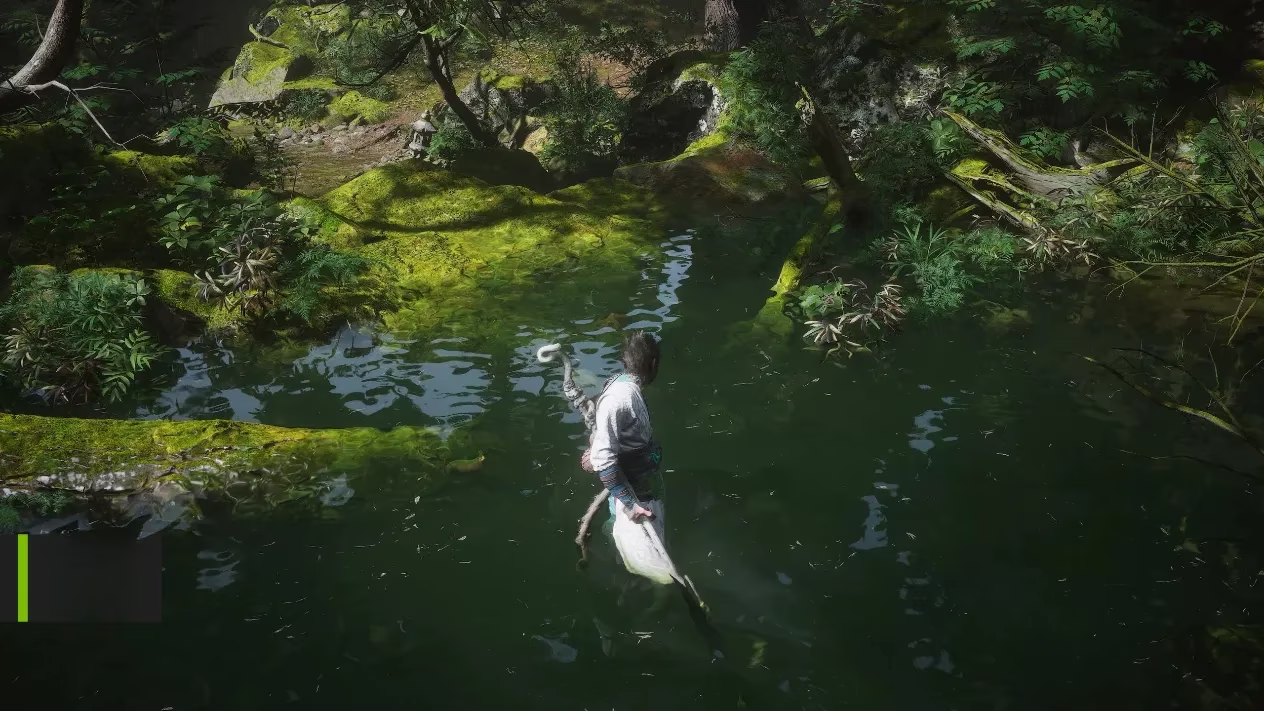
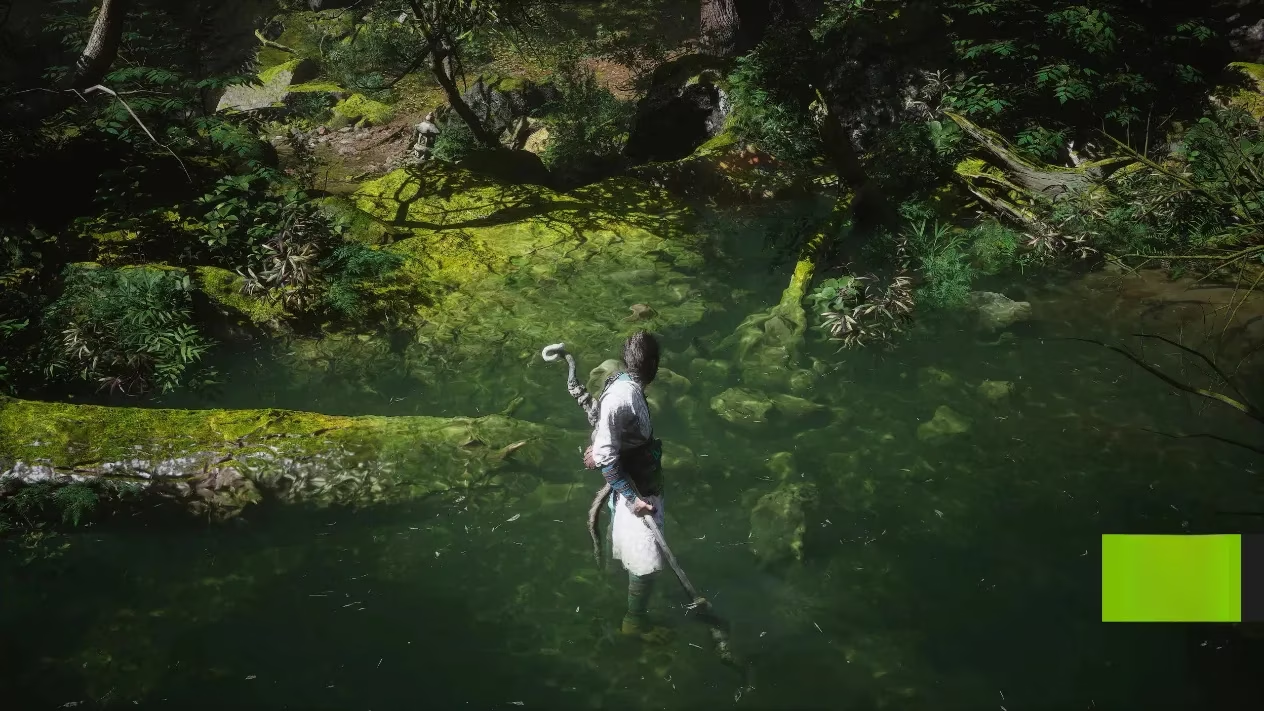
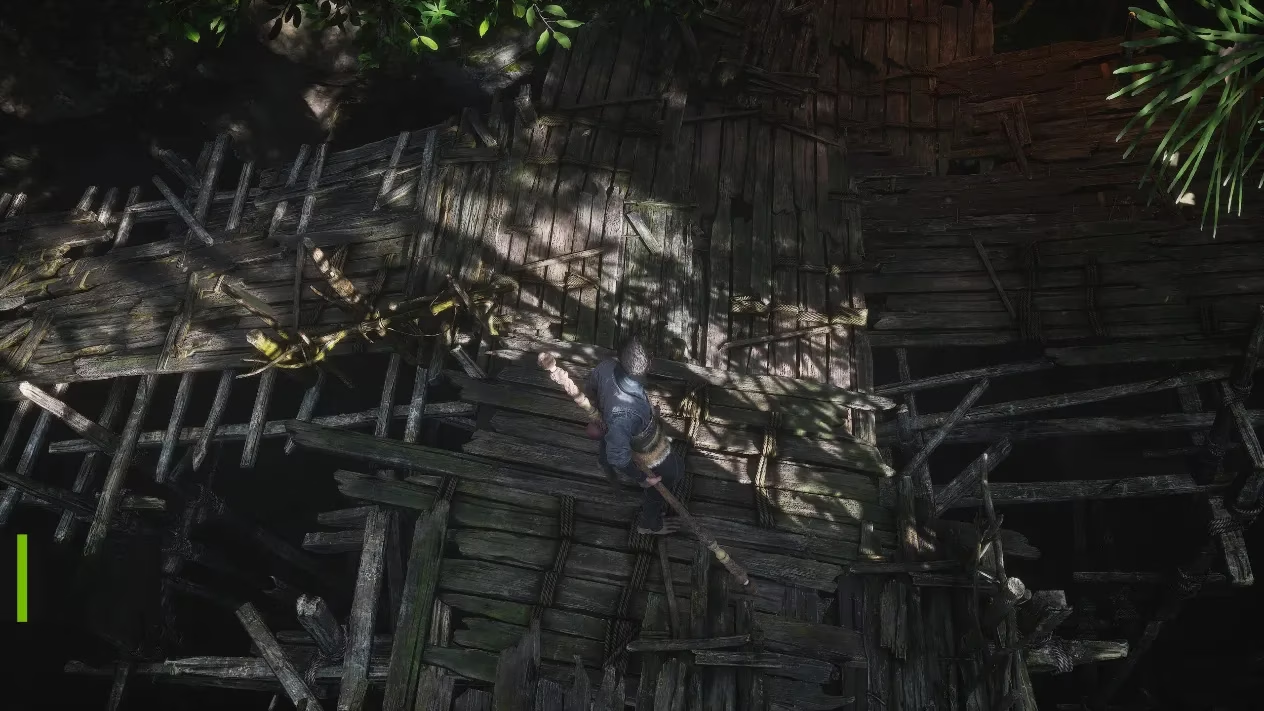
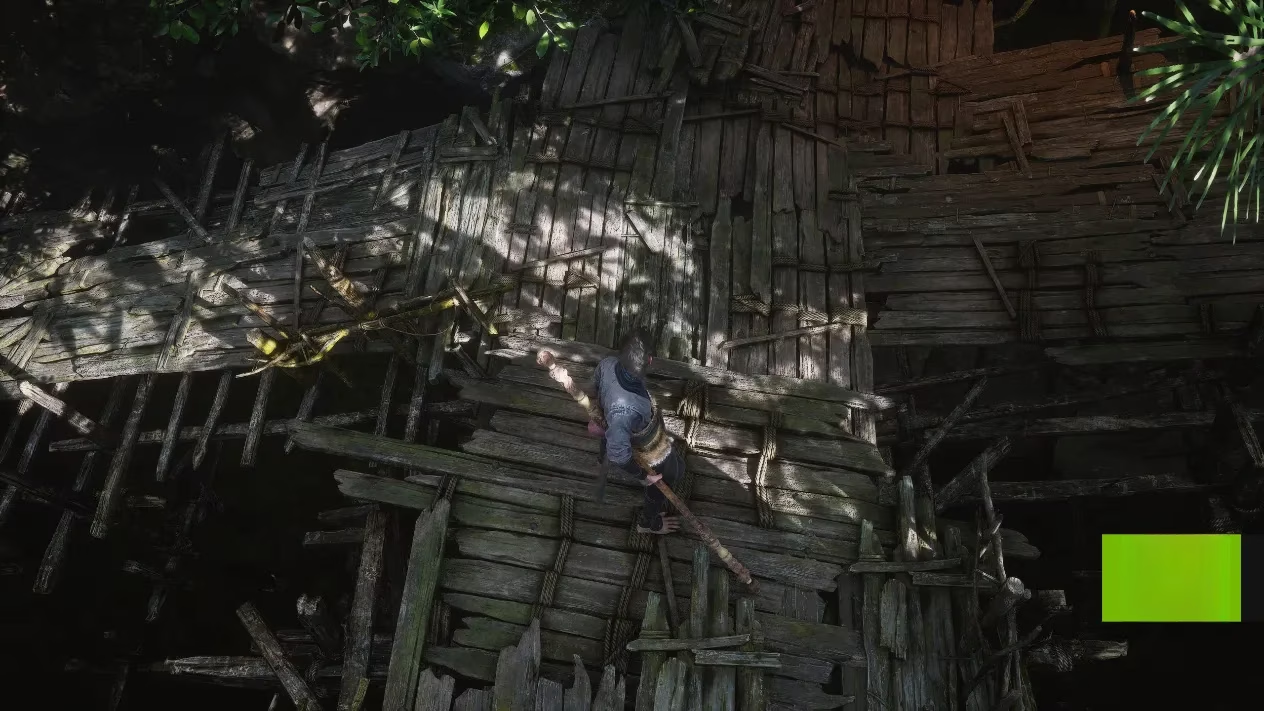
Ray traced caustics are not unheard of in games, but they are still rare. The technology simulates the real-world effect of light rays being reflected and refracted by water, curved surfaces, and objects, creating unique light patterns on nearby surfaces such as riverbeds. Once again, ray tracing improved realism and immersion. Shadows got the same treatment. Ray traced shadows added a pleasing richness to the fantasy environments with contact hardening and softening, self-shadowing, and higher levels of detail free of aliasing. Nearby objects projected full and grounded shadows, while fine details of distant and nested structures could be resolved for a more realistic image.
The Benchmark Table That Made PC Builders Sweat
NVIDIA also offered a preview of the game’s performance. The test setup used 4K resolution, DLSS Super Resolution in Performance Mode, DLSS Frame Generation enabled, and full ray tracing cranked to the maximum. The results gave hardware enthusiasts something to chew on:
| GPU | Average FPS in NVIDIA’s 4K full ray tracing test |
|---|---|
| GeForce RTX 4090 | Nearly 100 FPS |
| GeForce RTX 4080 SUPER | 74 FPS |
| GeForce RTX 4070 Ti SUPER | 66 FPS |
For the RTX 4090, nearly hitting 100 FPS under those settings was a tall order and a clear flex. The Game Ready driver was set to arrive the following week, presumably before the official launch. The Black Myth: Wukong GeForce RTX 40 Series Bundle could be purchased until August 20, the release day. And for anyone without a powerful enough PC, there was always the GeForce NOW option for cloud streaming.
Why It Still Matters in 2026
By 2026, the hardware landscape has moved the goalposts, and newer GPUs have made butter-smooth 4K ray tracing less of a fantasy. Yet Mara still pulls up that old benchmark table when friends ask why full ray tracing is worth the fuss. Black Myth: Wukong was not just a pretty face; it was a stress test with a story. The multi-bounce lighting, the mirror-like reflections, the particle reflections, the caustics, and the crisp shadows all worked together like a well-rehearsed crew. The game launched with plenty of hype, but the technical showcase has aged better than most. For PC players, it remains a handy yardstick: if a rig can run this game with full ray tracing and DLSS doing its thing, it has earned its stripes.